In the Pantry
Is Dimethicone (E900) Halal? A 2026 Label Guide
Updated 6 October 2026
Dimethicone is a kitchen silent helper that most shoppers never see, until it turns up on a label and stops them at the aisle.
What dimethicone actually is, and why it is in food at all
Dimethicone is a polymer built from silicon, oxygen, carbon and hydrogen. The chain is long, slippery and water repellent, which is why a trace of it stops milk from boiling over, stops oil from foaming in a deep fryer and stops icing from cracking on a fondant cake. The food grade version is sold under the E number E900 and is generally recognised as safe by food regulators on both sides of the Atlantic, including the US Food and Drug Administration, where it appears on the list of substances that are permitted in food with no upper limit other than good manufacturing practice.
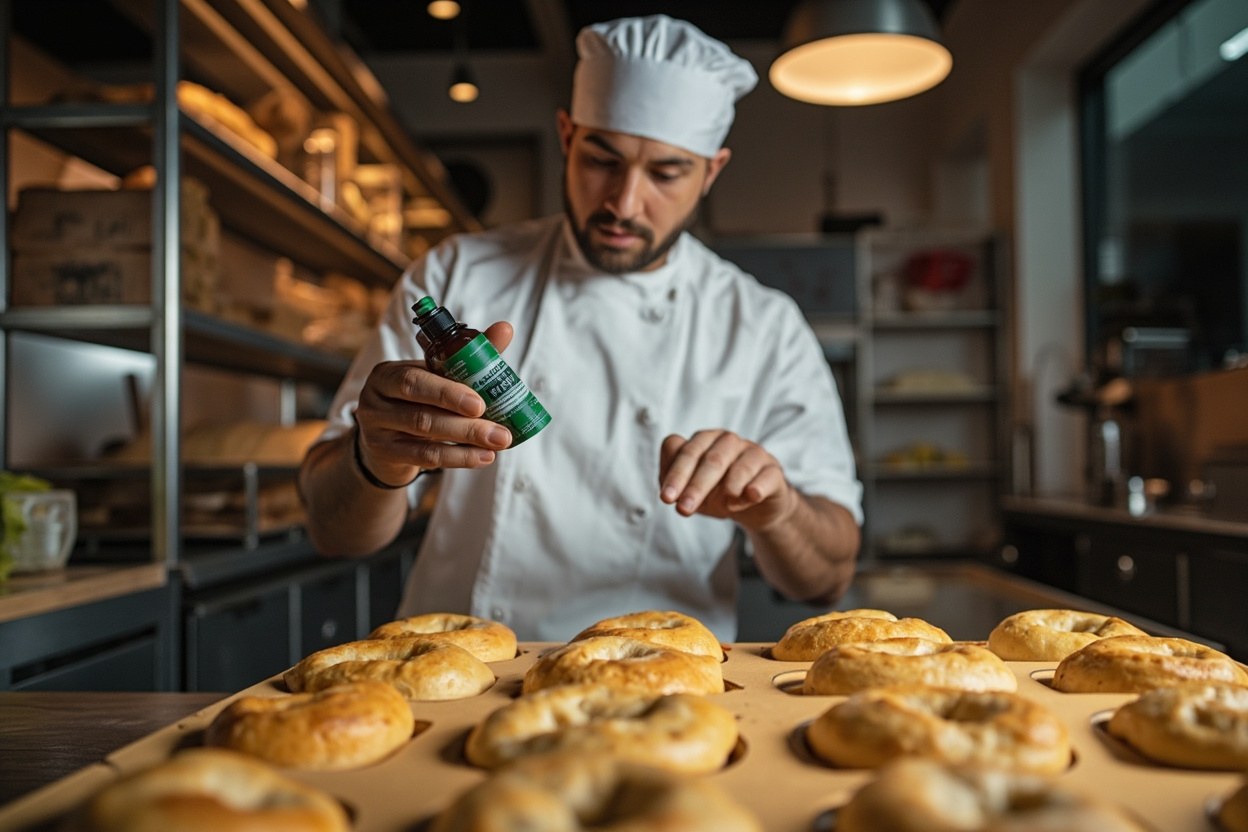
Outside the kitchen, dimethicone is the same slippery polymer you meet in a conditioner bottle, a barrier cream for nappy rash and a silicone muffin mould. The molecule does not care which job you give it. What changes between the kitchen and the bathroom is the purity of the raw material and, more importantly, the source of any helper ingredients mixed in to make a usable product. That second point is where the halal question lives.
If you only ever see dimethicone on a shampoo label, the conversation is mostly cosmetic and you can read our wider guide to personal care ingredients for the framework. The food conversation is sharper because the additive is often added at the processing stage, in factories that also handle non halal lines, and the source of the dimethicone and its carriers can be either mineral, plant or, in a shrinking minority of cases, animal.
How dimethicone is made, and where an animal source can sneak in
Food grade dimethicone starts as silica sand. The sand is heated with carbon at very high temperature to produce metallic silicon, which is then reacted with methyl chloride to build the polymer chain. At no point in that core reaction is an animal required. The molecule that comes out the other end is identical whether the methyl chloride was made from petroleum or from any other source.
The halal question opens up in two later steps. The first is the carrier fluid that turns a thick dimethicone into a sprayable antifoam. Polydimethylsiloxane is too viscous to drip from a nozzle, so blenders cut it with a carrier such as MCT oil, sunflower oil, water or, in a handful of older defoamer formulations, tallow derived stearic acid. Tallow is rendered animal fat, and even when the stearic acid is then reacted and purified into a synthetic carrier, the animal origin can still appear on a technical data sheet. A second, smaller concern is the silicone moulds and tubing used inside factories, which can be lubricated with tallow based release agents. Those release agents are not part of the dimethicone you eat, but they do appear in halal audit checklists.
Food grade dimethicone sold in drums to bakeries and dairy plants is, in 2026, overwhelmingly plant based in the European Union, the United Kingdom, the United States, Malaysia, Indonesia and the Gulf. Auditors from JAKIM, MUI, ESMA and IFANCA increasingly require written confirmation that any animal derived tallow in the supply chain has been replaced with vegetable stearic acid, and major suppliers including Wacker, Dow, Shin Etsu and Momentive publish plant origin statements as a matter of course. The risk has shifted from routine to edge case, but it has not disappeared.
Where you actually meet E900 in 2026, and which uses matter for halal
Dimethicone is unusual among E numbers because the same additive shows up across four very different settings. Each setting has its own risk profile and its own label conventions, so a blanket ruling is less useful than a setting by setting walk through.
1. Antifoam in milk, soy drink and halal certified dairy. Milk is heated in large vessels and the proteins in it foam up. A few drops of a dimethicone emulsion per thousand litres is the cheapest way to stop the foam from boiling over. In halal dairy, the emulsion is added after pasteurisation and before the milk goes into the bottle. Major halal dairies in the UK, Saudi Arabia, the UAE and Malaysia either use a 100 percent plant origin defoamer or have switched to mechanical foam control. The halal certificate on the bottle is, in practice, enough to cover this use, because the certifier has already inspected the defoamer.
2. Antifoam in cooking oil, including oil used for halal fried foods. Industrial fryers in chip shops, chicken factories and snack plants dose a dimethicone emulsion into the oil at around 1 to 10 parts per million. The same five questions apply. Is the carrier oil plant based? Is the antifoam halal certified? Has the factory audited the supplier? Most large halal fried chicken chains in 2026, from Albaik style operations to UK high street brands, audit this step because the antifoam sits inside the very oil that touches the bird.
3. Release agent in industrial bakeries. Dimethicone spray is the modern alternative to the greased tray. It is used on the conveyor belt that carries hamburger buns, pitta breads and par baked rolls into the oven. A small number of bakery release sprays still list tallow or stearic acid of unspecified origin. The halal certifier for a major supermarket in the UK, for example, has been publishing tighter guidance on release sprays since 2024, and a handful of bakery lines have been reformulated to a fully plant based spray in 2026.
4. Anti caking and glazing on salt, sugar and confectionery. A tiny amount of dimethicone is sometimes added to table salt to keep it free flowing in humid weather, and to hard candies and fruit coated cereals as a glaze. The dose is so small that the animal question is largely academic, and the major kosher and halal bodies treat food grade dimethicone in this role as acceptable when the carrier is plant based.
How to read the label in 2026, step by step
Stand in front of the back of pack and you have about thirty seconds. Here is the order in which the information will help you.
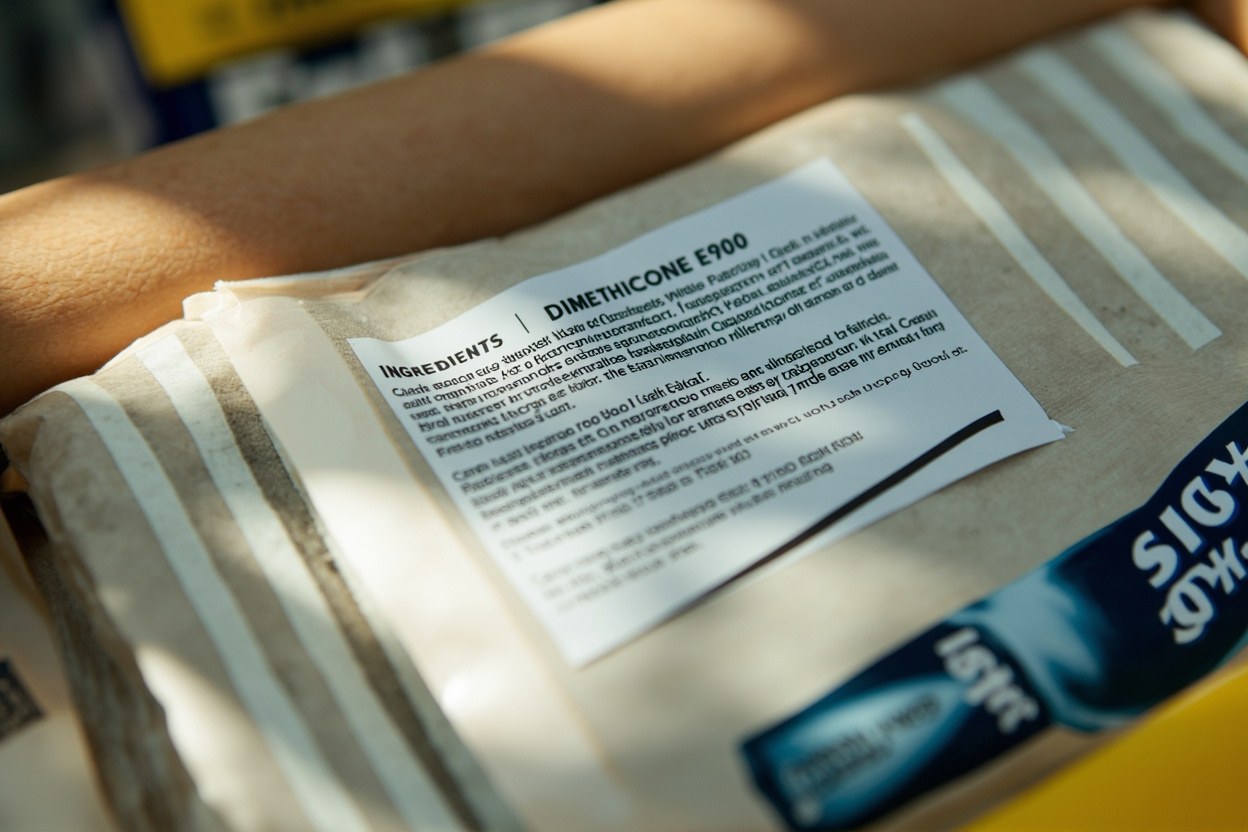
Step one, look for the word dimethicone or the code E900 in the ingredients panel. If neither appears, you are not having the dimethicone conversation, and the rest of the label is about something else.
Step two, look for a halal or kosher symbol on the same pack. A kosher symbol does not make a product halal, but it does mean a rabbi has checked the supply chain for animal ingredients, and that information is useful. A halal symbol from a certifier you trust means the question is already answered. A useful round up of which symbols actually help in 2026 is in our halal certification guide.
Step three, look at the front of pack claims such as plant based, suitable for vegetarians or no animal derived ingredients. None of these are halal claims, and a vegan claim is not a halal claim either, but a vegan claim rules out the tallow origin for the dimethicone carrier.
Step four, if the pack gives no helpful information and the product is an antifoam sprayed directly on halal meat, on halal dairy or on halal bakery lines, contact the brand. The two questions to ask are: is the dimethicone of plant origin, and is the carrier fluid of plant origin. A written answer is enough for most families. Keep the email in case the recipe or the supplier changes next year.
What the major halal bodies say, in plain English
The biggest shift in 2026 is that JAKIM, the Malaysian authority, has tightened its review of antifoam agents used in halal meat and halal dairy plants and now requires suppliers of food grade dimethicone to declare the origin of any stearic acid in the formulation. ESMA in the United Arab Emirates has aligned its position with the Gulf standard, and MUI in Indonesia has updated its fatmawa list to clarify that dimethicone is permitted when the carrier is plant based or when the dimethicone is added at a level below 10 parts per million in a finished food. The European halal bodies, including the UK based Halal Food Authority and the Dutch Halal Trust, treat E900 as acceptable when the supplier declaration is in place, which is now the default for European food grade dimethicone.
For Muslim shoppers who are not halal auditors, the practical upshot is simple. Trust the halal symbol on the pack when there is one, and ask the brand when there is not. The molecule is the same in every jar, and the only moving part is the carrier fluid and the supply chain documentation behind it.
Tools, further reading and a few practical links
If you are working through your kitchen at home, our halal certification in 2026 round up will help you decide which of the symbols on the shelf actually save you a phone call to the manufacturer, and our wider E number explainers, including the entries on titanium dioxide, carrageenan, beeswax, brominated vegetable oil, and ethanol in bread, will give you the same label logic for the other additives you meet on the same shopping trip. The halal food list and haram ingredients list pages collect the same approach across every category, and the food additives section in the right hand column keeps the latest pieces together.
Quick answers
- Is dimethicone the same as silicone?
- Yes, dimethicone is a specific silicone polymer used in food, cosmetics and medicine, and the E number E900 only covers the food grade version.
- Does E900 come from pork?
- No, the dimethicone polymer is made from sand and methanol. The animal concern, where it exists, is the carrier fluid or stearic acid that some older formulations use, and a halal or vegan claim on the pack usually rules that out.
- Is dimethicone safe to eat?
- Food regulators treat food grade dimethicone as safe at the levels used in food, and the body does not absorb the polymer, which is why it is also used in infant colic drops.
- Can I use a dimethicone based silicone mould for baking at home?
- Yes, the mould itself is not an ingredient, and the dimethicone coating on a new mould is set during manufacture. Treat it as you would any other baking tool and wash it before first use.
General information, not a fatwa. Where scholars differ, we try to say so. For your situation, ask a scholar you trust.