In the house
The nisab threshold, explained
Updated 6 September 2026
Nisab is 87.48 grams of gold or 612.36 grams of silver, priced at today's market rate, not a flat dollar figure everyone is supposed to hit. Which metal you use to measure it can shift the threshold by a wide margin, since gold and silver differ sharply in price per gram.
How nisab is defined
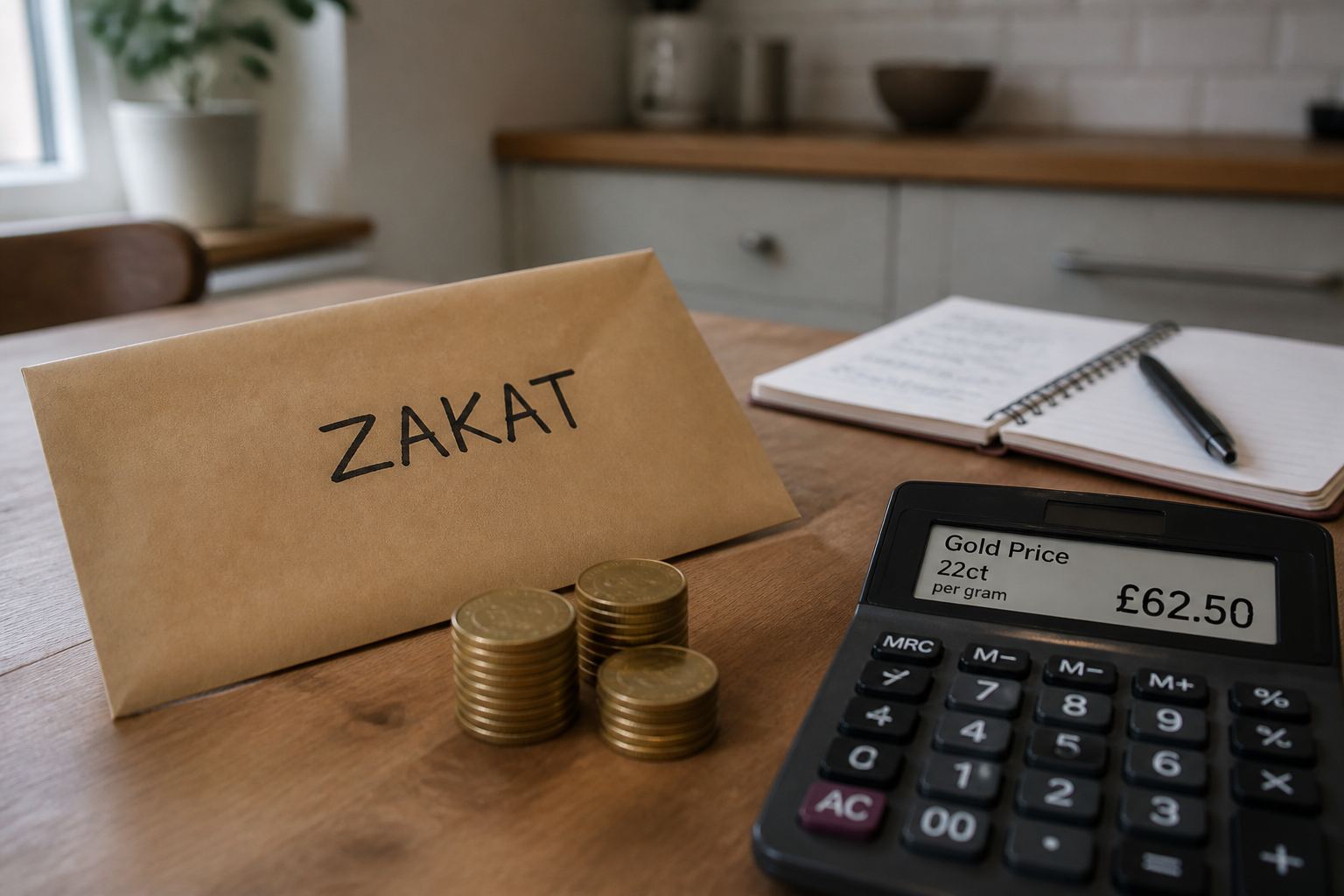
Zakat isn't owed on every dollar sitting in your account. It's owed once your zakatable wealth, savings, business stock, gold, silver, investment holdings, and yes, crypto, stays above a set threshold for a full lunar year (the hawl). That threshold is nisab. It was never meant to be a flat cash amount pinned to one currency forever. It's tied to a weight of metal, and you convert that weight into today's prices when you're figuring out whether you owe anything.
That design choice makes sense once you think about it. A weight of gold or silver holds its value across decades and currencies far better than a fixed number of dollars or rupees would. The tradeoff is that you can't just memorize a figure. You need a current price, which is exactly what a zakat calculator handles for you automatically.
Two standards, two different thresholds
Here's the part that trips people up. There are two accepted ways to set the weight, and they land in very different places.
- Gold standard: 87.48 grams of gold, valued at today's gold price.
- Silver standard: 612.36 grams of silver, valued at today's silver price.
Gold trades at a much higher price per gram than silver does, so the gold-based nisab comes out to a considerably higher dollar figure than the silver-based one. Someone using the silver standard can cross the threshold, and owe zakat, at a wealth level where someone using the gold standard wouldn't yet owe anything at all.
| Standard | Weight used | Practical effect | Common reasoning |
|---|---|---|---|
| Gold nisab | 87.48 grams of gold | Higher threshold in local currency; fewer people qualify to pay | Reflects the metal historically most associated with wealth and savings |
| Silver nisab | 612.36 grams of silver | Lower threshold in local currency; more people qualify to pay, more is collected for those in need | Seen by many contemporary scholars as more inclusive, catching wealth that gold's higher bar would miss |
Why the gap matters in practice
This isn't a rounding difference. Because silver is worth so much less per gram than gold, the silver nisab typically sits well below the gold nisab in most currencies at most points in market history. That means a person with modest but real savings, someone who wouldn't come close to the gold threshold, may already be obligated to pay zakat under the silver standard.
Practically, that's a meaningful decision to get right. Paying zakat when you're not yet obligated isn't sinful, it's just extra sadaqah in effect, but believing you're exempt when you actually meet the (lower) silver threshold means missing an obligation, not just a nicety. If you're unsure which side of either line you fall on, running your numbers through a calculator that lets you toggle between standards is far more reliable than guessing.
For dated examples of how far the two lines moved in 2026, and why charity websites quote different nisab figures on the same day, see nisab in 2026.
Why scholars differ on which one to use
Both the gold and silver standards come from real, established scholarly reasoning, and neither is a fringe position. Historically, gold and silver were both used as currency, and early scholars discussed nisab in terms of both metals side by side. Over time, and especially as silver became far cheaper relative to gold than it once was, the two standards drifted apart in what they actually mean in modern money.
Many contemporary scholars lean toward the silver standard specifically because it produces a lower, more inclusive threshold, meaning it catches more people who have real disposable wealth and directs more support toward the eight categories of zakat recipients described in the Quran, including the poor and the needy. Other scholars and institutions continue to favor the gold standard, often reasoning that gold's relative stability makes it a steadier long-term anchor for what counts as meaningful wealth. Both views are held by serious, qualified scholars, and this is genuinely one of those areas where reasonable people within the tradition land differently. If your local mosque, scholar, or fiqh council has a stated preference, following that guidance is a reasonable and common approach.
Where crypto and other modern assets fit in
The two-standard question sits alongside another common point of confusion: what value do you use for an asset like crypto, once you've settled on a nisab standard to compare it against? The answer is today's market price on your zakat due date, not what you originally paid. That holds even if the asset has dropped in value since you bought it. A zakat calculator built to handle crypto at current value, alongside a choice of gold or silver nisab, removes both sources of confusion in one pass rather than leaving you to hunt down metal prices and exchange rates separately.
The same instinct toward precision over assumption shows up elsewhere on this kind of question. Whether something like creatine is halal often comes down to capsule material rather than the supplement itself, and whether a packaged food is fine to eat often comes down to a specific additive rather than the product as a whole, which is the whole reason a tool like the halal ingredient checker exists. Nisab works the same way. The general idea is simple; the specific number depends on details worth checking rather than guessing.
If you take one thing from this: nisab was never meant to be a single number you memorize once and forget, it's a living calculation tied to real metal prices and a standard you choose deliberately, so treat it as something to check each year rather than something you assume you already know.
Quick answers
- Why won’t you print this year’s nisab in pounds?
- Because it would be stale within days. Use a live gold or silver price from a source you trust.
- Which standard should I pick?
- Scholars differ. Many contemporary voices prefer silver because it brings more people over the line. The calculator lets you pick either.
- Is nisab enough on its own?
- No. Hawl — a lunar year — is the other half of the common cash test.
General information, not a fatwa. Where scholars differ, we try to say so. For your situation, ask a scholar you trust.