In the house
Gelatin in sweets and gummies
Updated 9 November 2026
The sweet is not the ruling
Gelatin has no E number, although some lists wrongly call it E441. It is collagen from skin, bone, or connective tissue. In some gummies that is pork. In others it is beef, sometimes fish, sometimes a mix. The packet that only says “gelatin” has not told you which.
Pork-derived gelatin is not permitted on the stricter view; some scholars accept it after transformation (istihala), so ask the scholar you follow. Beef gelatin follows the animal and the slaughter. Fish gelatin is generally treated as fine. Pectin (E440) and starch gummies are not gelatin at all. A kosher mark rules out pork gelatin (the Orthodox Union describes kosher gelatin as coming from beef hides or fish), but it does not by itself show that beef gelatin came from halal slaughter; see is kosher food halal?
Kids’ packets
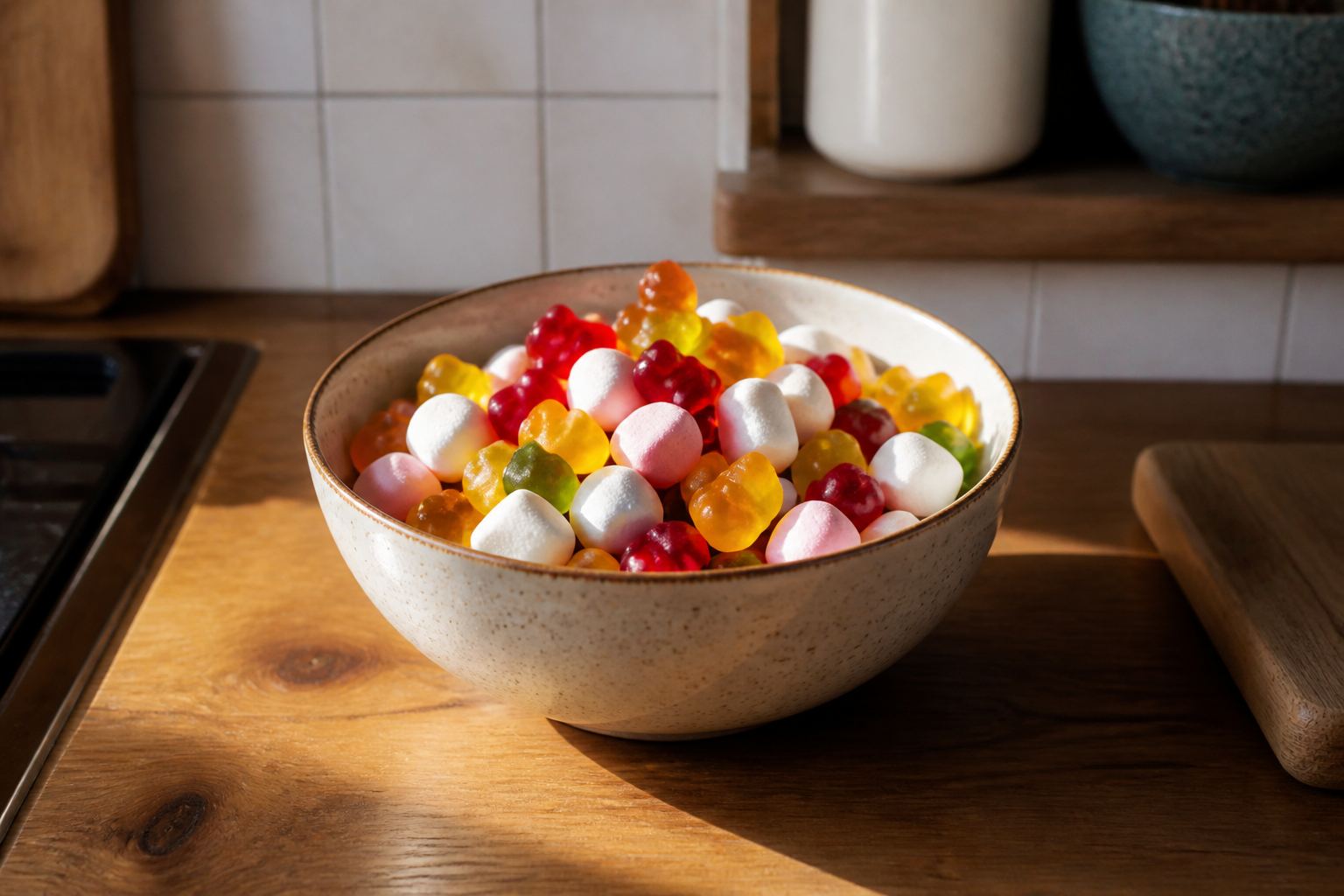
This is a household page because this is where the argument actually happens: a bowl of sweets after school, not a supplement tub. The method is the same as the grocery label. Read the ingredients. If gelatin is unnamed, look for a mark or put them back. If the pack says pectin, you are not having the gelatin argument.
A shiny glaze can be shellac (E904), which sits in the same insect debate as carmine. Not every shiny sweet has it. The ingredients line will say “glazing agent” or E904 if it does.
Capsules are a different page
Gelatin in a vitamin capsule is the same substance and a different use. See capsules and medicine. Do not use a sweet as your analogy for a prescribed drug.
Fruit pastilles, gums and popping boba
Brand matters here, and it is easy to get wrong. In the UK, Fruit Pastilles are made by Rowntree's, owned by Nestle. Nestle's confectionery site, as we read it on 9 November 2026, says it uses no gelatine in its core range of Jelly Tots, Fruit Pastilles, Fruit Gums and Pick and Mix, and describes them as suitable for vegetarians and vegans. The same page says pork gelatine is used in Randoms, Squidgers and Rowntree's Lollies. A product without gelatine is not thereby halal-certified, and Nestle's page does not say either way, so check the pack for alcohol-based flavours if that matters to you.
Popping boba, the small bursting balls in bubble tea and desserts, usually has a shell made with sodium alginate, which is extracted from seaweed. The questions are the filling, any gelatine, an alcohol carrier in the flavouring, and whether the product is certified. Catering products differ: one UK retailer lists Simply strawberry popping boba as vegan and halal certified, and another lists Sephra mango popping boba as not halal or kosher certified. These are retailer listings, so read the certificate or the pack before you rely on either.
Thickeners that are not gelatin include pectin and carrageenan.
Quick answers
- Are all gummies gelatin?
- No. Some use pectin or starch. The ingredients line says which.
- Is “bovine gelatin” automatically fine?
- No. Bovine means cow. It does not mean zabiha. Scholars differ on whether that matters, because some accept gelatin after chemical transformation (istihala). If you follow the stricter view, treat uncertified bovine gelatin as doubtful.
- What about marshmallows?
- Same gelatin question, plus sometimes shellac as a glaze (E904).
General information, not a fatwa. Where scholars differ, we try to say so. For your situation, ask a scholar you trust.