In the house
Is soy sauce halal?
Updated 6 September 2026
Two products share a name
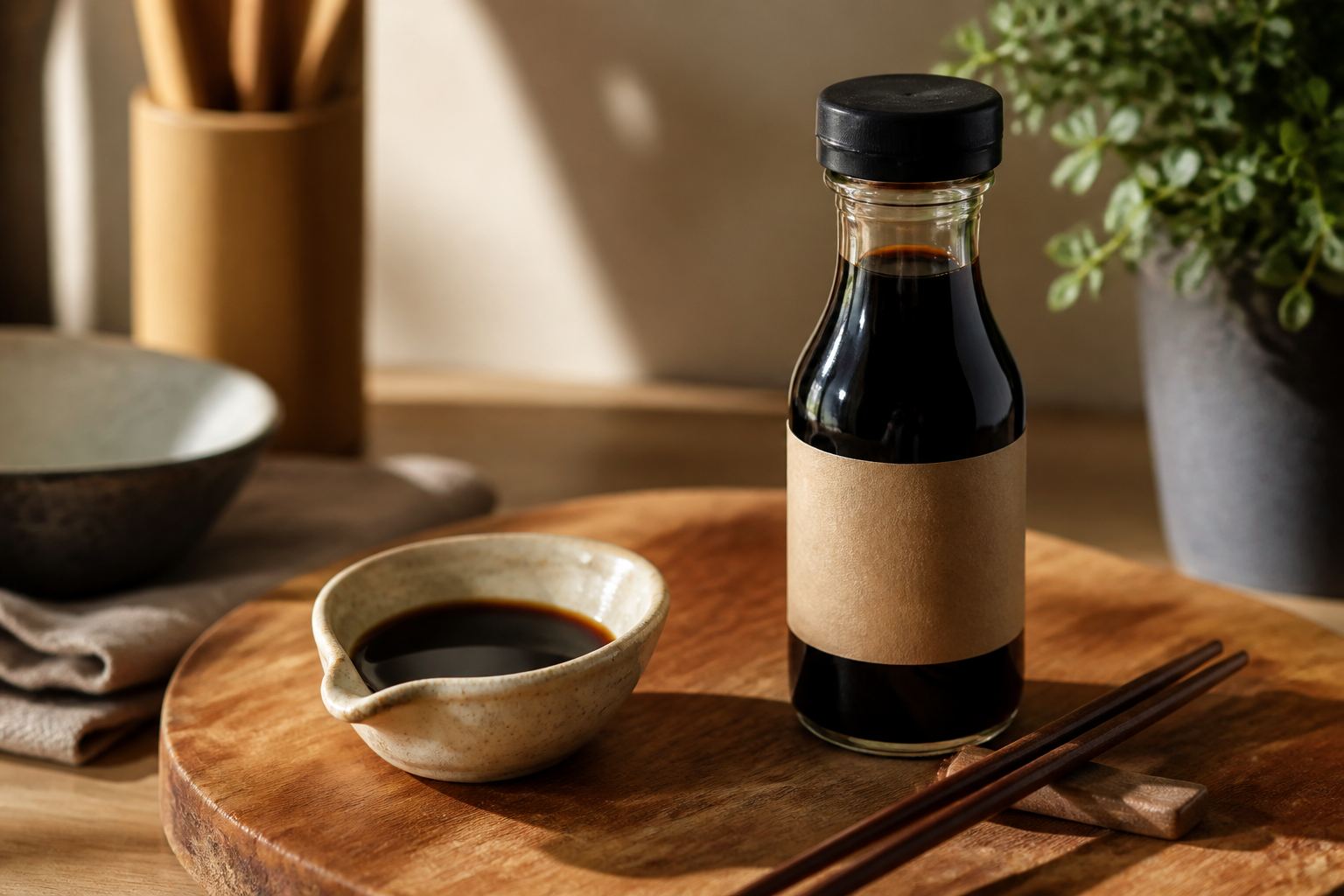
Naturally brewed soy sauce is soybeans, grain, salt, and time. Yeast produces a small amount of ethanol as it works. That is the bottle most people mean. A cheaper “soy sauce” on some labels is hydrolysed vegetable protein, water, salt, and colour — a different process, usually without that fermentation step.
Neither process secretly adds pork. The live question on the brewed bottle is the leftover alcohol, plus whatever flavourings a brand adds after. The live question on the hydrolysed bottle is whatever else is in the ingredients line.
Do not invent a percentage
Forum posts love a number below which soy sauce is “fine”. That number is not a ruling, and we will not print one. Alcohol content varies by brand and batch. Published scholarly positions on fermented flavourings differ in kind, not by a homemade cutoff.
A recognised certification mark means someone already asked the factory the questions you cannot answer from the supermarket aisle. If your household wants that closed, buy the marked bottle. If your scholar treats culinary fermentation as distinct from drinking, follow that — and say so at home.
Tamari, shoyu, aminos
Tamari is often a wheat-free soy sauce; shoyu usually includes wheat. Liquid aminos are typically soy protein and water without the same brew. Coconut aminos are not soy at all. Each still needs its own ingredients read. Wheat is a gluten question, not a halal one, unless alcohol or flavouring has been added.
Quick answers
- Is all soy sauce brewed?
- No. Some is chemically hydrolysed vegetable protein. Read the ingredients. Brewed and “made with soy” are not the same process.
- Does fermentation alcohol make it haram?
- Scholars differ, as they do on other fermented foods. A certification mark is the practical close for most households.
- What about tamari or liquid aminos?
- Different recipes. Tamari is often wheat-free soy; liquid aminos are usually not brewed the same way. Check that bottle.
General information, not a fatwa. Where scholars differ, we try to say so. For your situation, ask a scholar you trust.