In the house
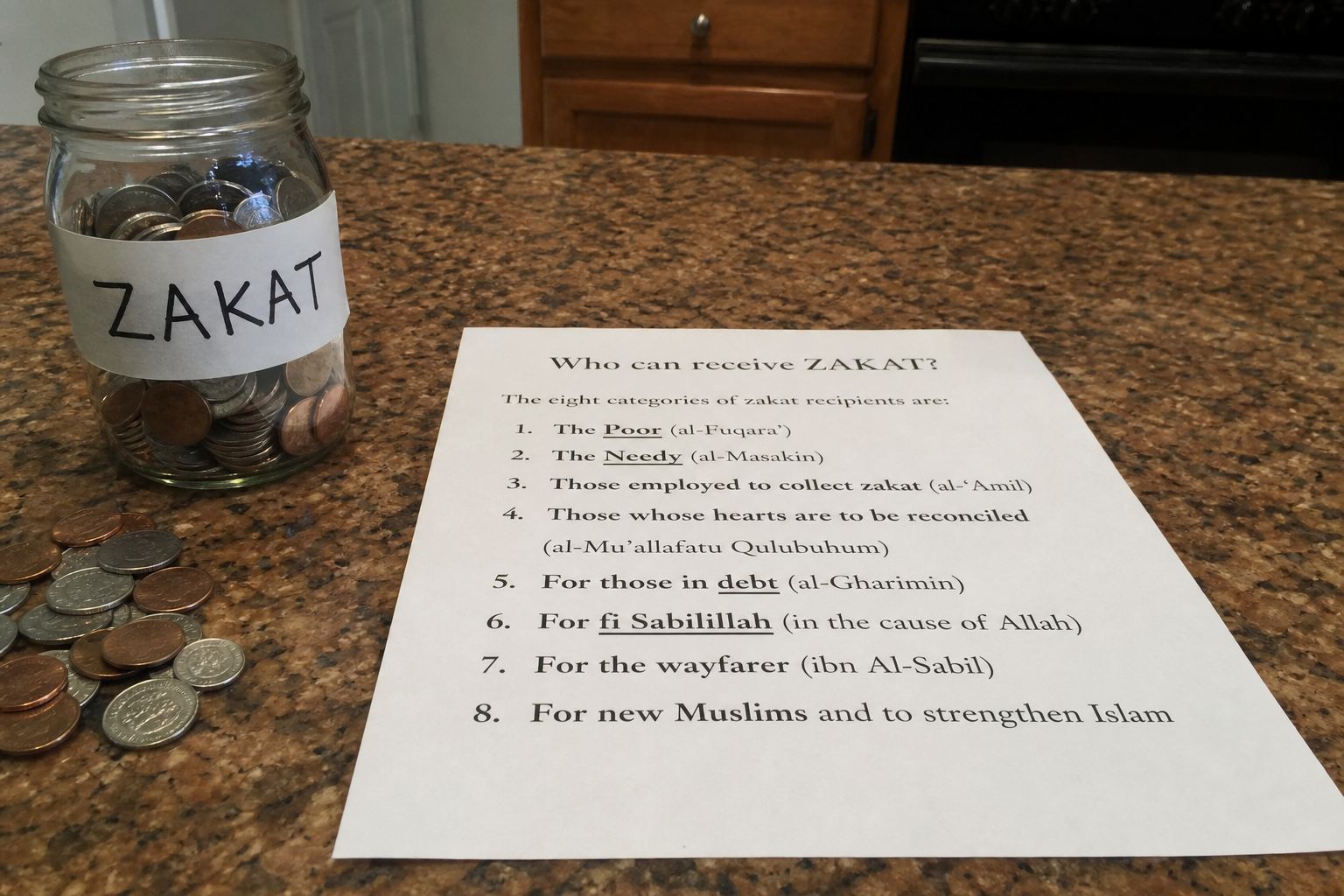
Who is eligible to receive zakat?
Updated 6 September 2026
Before you hand zakat to anyone, whether it's cash pressed into someone's hand or a transfer to an organization, check that the recipient actually falls into one of the eight categories the Quran sets out for who can receive it. Zakat isn't like ordinary charity, where you give to whoever moves you. It has a defined guest list, and that list comes from scripture, not from local custom or a committee's preference.
Where the list comes from
All eight categories appear in a single verse, Quran 9:60, and this is about as settled as anything in this area of practice gets. Jurists across the major schools of thought (Hanafi, Maliki, Shafi'i, Hanbali) treat the list as fixed and complete. Where scholars discuss it further, the conversation is usually about how broadly to read a given category today, not whether that category belongs on the list at all.
The eight categories, plainly
Here's what each term actually points to in practice.
| Category | Who this generally means |
|---|---|
| Al-fuqara (the poor) | People with little to no income or assets, unable to cover basic needs. |
| Al-masakin (the needy) | People in real financial hardship. Scholars draw the line between fuqara and masakin slightly differently, but both point to verified need rather than mild inconvenience. |
| Al-amilin alayha (zakat administrators) | Those who collect, manage, and distribute zakat on others' behalf, and are paid for that work out of the zakat itself. |
| Al-muallafah qulubuhum (hearts to be reconciled) | New Muslims and others whose relationship to the faith or community zakat can help support and strengthen. |
| Fi al-riqab (freeing those in bondage) | Historically, freeing people from slavery. It's a category few modern zakat funds have occasion to apply directly, though some contemporary discussion extends it to modern forms of bondage. |
| Al-gharimin (those in debt) | People carrying debt taken on for legitimate needs, not extravagance, who can't repay it from their own means. |
| Fi sabilillah (in the cause of Allah) | Broadly, efforts serving the cause of Islam. Classical scholars tended to read this narrowly; some contemporary scholars read it more broadly, to include things like Islamic education. This is one of the few spots where interpretation genuinely varies. |
| Ibn al-sabil (the stranded traveler) | Someone away from home who has run out of means to continue their journey or get back, even if they're well off at home. |
How this differs from giving sadaqah
It helps to keep this list separate from ordinary generosity. Zakat and sadaqah both count as charity in the broad sense, but they work under different rules.
- Zakat is obligatory on qualifying Muslims, calculated at 2.5% of net zakatable wealth once it's held above the nisab threshold for a full lunar year, and it can only go to the eight categories above.
- Sadaqah is voluntary. There's no minimum, no calculation, no waiting period, and no restriction on who receives it. You can give it any time, in any amount, to anyone in genuine need, in addition to whatever zakat you owe.
If you haven't worked out what you owe yet, the zakat calculator handles that first step, including today's value for crypto holdings and a choice between the gold and silver nisab standard.
A few things worth knowing before you give
You don't have to personally interview a recipient to confirm they qualify. Most people give through an organized channel, a mosque zakat fund, an established relief organization, or a local committee, and trust that screening to whoever is distributing the funds. That's a long standing and entirely normal way to give, not a shortcut.
A common question is whether zakat can go to family. In general, you can't give it to your own spouse, children, or parents, since you're already responsible for supporting them. Other relatives, siblings, cousins, in laws, can receive zakat if they genuinely fall into one of the eight categories, and some scholars consider that preferable to giving to strangers, since it also maintains family ties.
Zakat has a kind of definitional clarity that a lot of everyday practice questions don't share. Whether a supplement capsule is fine to take, or whether a packaged food's ingredient list holds up, usually comes down to details on a label rather than a fixed scriptural list, which is part of why we built a searchable halal ingredient checker and a separate page walking through whether creatine is halal. Zakat, by contrast, draws on one source and one list of recipients that almost nobody disputes.
The eight categories named in Quran 9:60 are al-fuqara (the poor), al-masakin (the needy), al-amilin alayha (zakat administrators), al-muallafah qulubuhum (hearts to be reconciled), fi al-riqab (freeing those in bondage), al-gharimin (those in debt), fi sabilillah (in the cause of Allah), and ibn al-sabil (the stranded traveler). No major school disputes that these are the eight, and no ninth category competes for a spot. Interpretation only varies at the edges of how each category gets applied, most visibly in how broadly to read "fi sabilillah" today, and in judgment calls about who counts as poor enough, needy enough, or in debt enough in a given place and time.
Quick answers
- Can I give zakat to a relative?
- Often, if they are eligible and not someone you must already support. Separate page.
- Can I give it all to one category?
- Schools discuss distribution. Eligibility comes first.
- Is a registered charity automatically eligible?
- Only if the money reaches eligible people. The registration is a legal fact, not a Quranic category.
General information, not a fatwa. Where scholars differ, we try to say so. For your situation, ask a scholar you trust.