In the house
Zakat vs sadaqah
Updated 6 September 2026
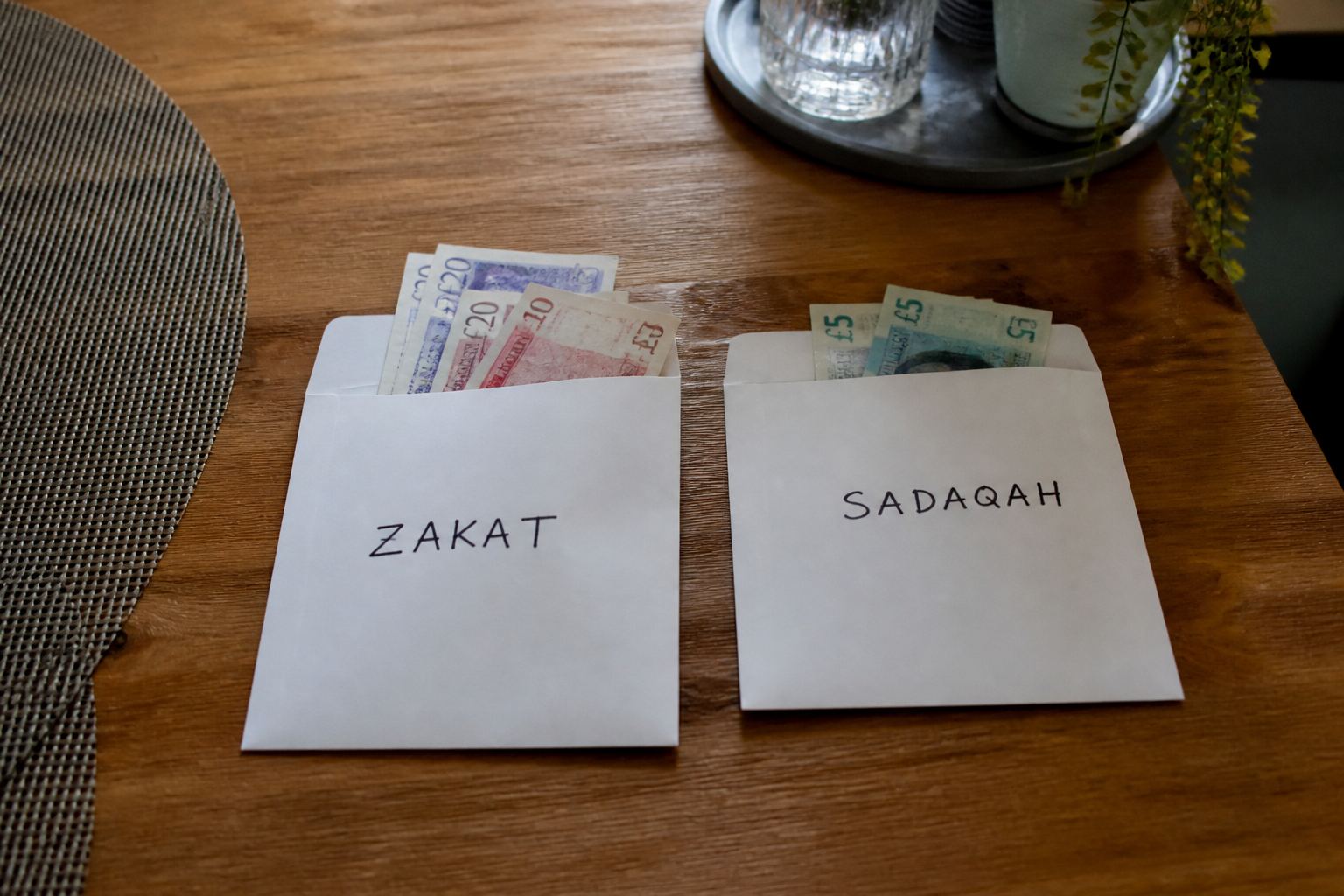
Zakat is obligatory; sadaqah is voluntary. Charity you already give quietly, out of habit or generosity, doesn't automatically count toward the zakat you owe, even if the amount matches. Zakat is a fixed, obligatory payment with its own threshold, its own rate, and its own deadline. Sadaqah is voluntary giving with none of those constraints. Both are charity. They are not interchangeable.
Zakat: obligatory, calculated, and due on a schedule
Zakat is one of the five pillars, and that status changes how it works. It isn't a suggestion or a nice gesture. It's owed, 2.5 percent, or one part in forty, of your net zakatable wealth, once that wealth has sat above the nisab threshold for a full lunar year, known as the hawl. Below the nisab, nothing is owed. Above it for less than a year, nothing is owed yet.
Nisab itself has two common standards: the value of 87.48 grams of gold, or 612.36 grams of silver. Scholars differ on which to use. Many contemporary scholars lean toward the silver standard, since it produces a lower threshold and brings more people into the safety net on the receiving side. Others hold to gold. Either is a legitimate position; the practical advice is to pick one and apply it consistently, year after year, rather than switching to whichever gives you a smaller bill.
Modern wealth complicates the count further. Crypto and other digital assets held as investments are valued at today's market price on the date your zakat is due, not what you paid for them, and that holds even if the asset has lost value since you bought it. A coin that's down 40 percent from your purchase price is still assessed at what it's worth right now, not what it cost you. If you're trying to work this out by hand across cash, gold, silver, and crypto all at once, a zakat calculator that lets you choose your nisab standard and prices crypto at today's value will save you the spreadsheet.
Sadaqah: voluntary, open-ended, and welcome any day
Sadaqah has none of that machinery. There's no minimum amount, no formula, and no deadline. You can give a large sum or a small one, today or next month, to one cause or scattered across several. It's charity in the broadest sense: money, but also a kind word, help carrying something heavy, or clearing something harmful off a path. Sadaqah sits on top of zakat. It never replaces it.
Side by side
| Zakat | Sadaqah | |
|---|---|---|
| Status | Obligatory (fard) on qualifying Muslims | Voluntary |
| Minimum | Only owed once wealth exceeds the nisab | No minimum; any amount counts |
| Rate | 2.5% of net zakatable wealth | No fixed rate; you decide |
| Timing | Once per lunar year, after the hawl | Any time, as often as you like |
| Who can receive it | Restricted to the eight categories in Quran 9:60 | Anyone or any cause you judge worthy |
| Intention required | Yes, must be given specifically as zakat | Not formally required |
The mix-up that costs people their zakat
The confusion usually runs one of two ways. Some people assume that because they already donate generously throughout the year, they've effectively covered their zakat, so there's nothing left to calculate. Others assume the reverse: once zakat is paid, further giving can wait until next year. Neither holds up. Zakat requires a specific intention, niyyah, at the time you give it. Money that left your hand as general generosity, without you designating it as zakat, doesn't retroactively count even if the amount happens to match what you owed. If a payment is meant to fulfill your zakat obligation, it needs to be given, and ideally recorded, as zakat.
Who can receive each
Zakat is more restricted on the receiving end than most people expect. The Quran, in 9:60, names eight eligible categories: the poor (fuqara), the needy (masakin), those who administer zakat collection (amilin), those whose hearts are being reconciled to Islam (muallafah qulubuhum), the freeing of those in bondage (fir-riqab), people in debt (gharimin), causes in the path of Allah (fi sabilillah), and the stranded traveler (ibn sabil). This list is well established across the schools of thought, and zakat funds need to reach someone or something inside one of these categories to count.
Sadaqah carries no such restriction. You can give it to a struggling neighbor, a mosque building fund, a charity that isn't Muslim-run, or a family member who needs help, whatever you judge to be a good cause. That flexibility is part of the point.
The same instinct, working out what's strictly required versus what's simply good practice, comes up across plenty of other everyday questions. Checking a label against a halal ingredient checker, or asking whether a gym supplement is fine to take, as with creatine, both come down to a similar kind of close reading: what the source material actually requires, and where there's room left for caution or preference.
Zakat is owed at 2.5 percent of qualifying wealth once it clears the nisab threshold for a full lunar year. Sadaqah has no threshold, no rate, and no deadline, and it can be given at any time.
Quick answers
- Can sadaqah replace zakat?
- No. It is extra, or it is what you give when zakat would be the wrong pot.
- Can I give zakat to a well-off neighbour I like?
- Not as zakat, unless they fall in a category. You can give them sadaqah.
- Is sadaqah jariyah a third thing?
- It is a kind of ongoing sadaqah, not a replacement for zakat.
General information, not a fatwa. Where scholars differ, we try to say so. For your situation, ask a scholar you trust.