Pantry
Is Cricket Flour Halal in 2026? A Label Guide for Muslim Shoppers
Updated 22 October 2026
In the house
Why cricket flour is on British shelves in October 2026
Walk down the free from aisle of any large Tesco, Sainsbury's or Waitrose branch in October 2026 and you will spot a small but growing cluster of bags and pouches labelled cricket flour, house cricket protein or Acheta domesticus powder. The category has moved from curiosity to mainstream pantry item in the last eighteen months, helped by a wave of UK food tech start ups and a handful of cross border brands that now ship from farms in Canada, the Netherlands and Malaysia.
For Muslim shoppers, the rise raises a perfectly fair question. Insects are not on the usual halal or haram lists that most of us grew up with, and the answer is not as obvious as it is for a chicken breast or a pork sausage. Cricket flour sits in a grey corner of the food world, and the only way through that corner is a careful read of the label.
This guide walks through what cricket flour actually is, how it is made, where Muslim scholars currently stand on eating farmed insects, and the exact lines you should look for on a 2026 pack before you tip a teaspoon into your pancake batter.
What cricket flour is, and how it is made
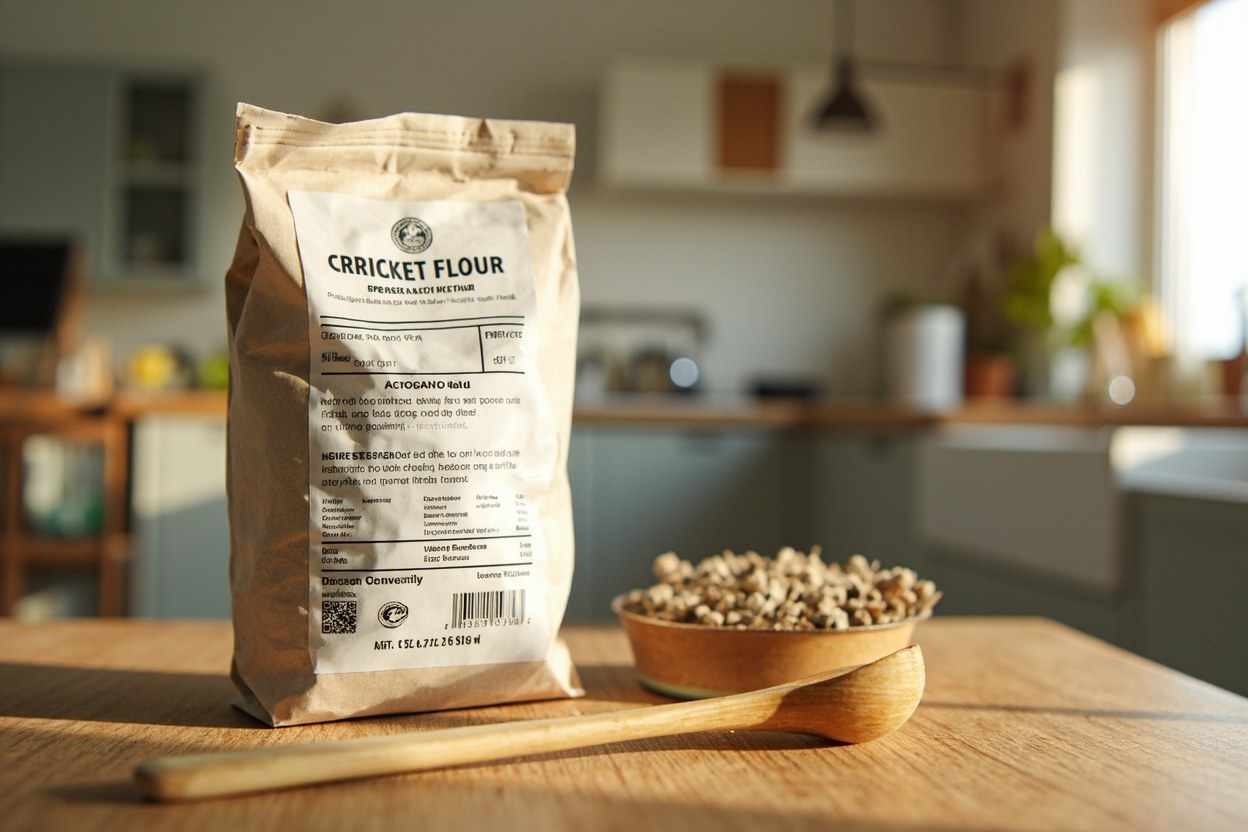
Cricket flour, also called cricket protein powder, is made by milling roasted house crickets (Acheta domesticus) into a fine tan coloured powder. A single tablespoon carries roughly 8 grams of complete protein, which is why brands pitch it as a quiet booster for bakes, smoothies and pasta dough.
The production line matters more for halal status than the cricket itself. A typical 2026 cricket farm in Ontario or Rotterdam looks like this. Eggs are hatched in a warm, clean room. Nymphs are moved to large trays and fed a defined diet, usually wheat middlings, soy meal, carrot and a vitamin premix. After around six to eight weeks, mature crickets are cooled, then frozen, then heated. The roasting step is what gives the powder its nutty, slightly earthy smell.
After roasting, the crickets are milled, sieved and packed. Some brands add an anti caking agent such as silicon dioxide (E551) and nothing else. Others add natural flavour, a small amount of salt, or a carrier such as maltodextrin. A 2026 niche is cricket flour blended with plant protein for baking, where the cricket content is as low as fifteen percent.
Three points from that short process are worth holding in your head. First, the feed is the first halal checkpoint. Second, the killing method is the second. Third, the carrier, the flavour and the shared equipment are the third. We will run through all three on a real label below.
Are crickets halal to eat according to Islamic law?
There is no single fatwa on cricket flour in October 2026, but a working consensus has emerged across the UK and European Muslim bodies that most of us shop with.
The Muslim Council of Britain has not issued a binding national ruling on insects. Individual scholars attached to the MCB have, however, signed off on a small number of insect protein products in the last two years, and those products carry a private halal certificate rather than a public symbol.
European scholars, working through bodies like the European Halal Certification council, have largely accepted farmed house crickets on the same basis as any other farmed animal, provided the diet, the slaughter step and the processing line pass the usual tests. A useful summary of that reasoning is captured in this Halal Focus explainer from earlier in 2026.
At a kitchen table level, the three rules of thumb most UK scholars use are simple. Crickets must be farmed, not collected wild. The diet must not include animal by products, blood meal or pork derivatives. The killing step must be clean, so freezing followed by roasting is generally accepted, while being fed to reptiles in the same facility is not.
Where you will find disagreement is around land living insects that are not normally eaten in any culture. A few older Hanafi texts treat all land insects as makruh. The Hanafi position has softened in modern British practice, with many local imams accepting insects when the alternative is to leave a proven and clean source of protein on the shelf. If you follow a strict reading, treat cricket flour as you would any new category and ask your local imam before you bake with it.
Reading a 2026 cricket flour label: a line by line guide
Pull up any cricket flour listing on a British grocer's site and you will see roughly the same skeleton. Use this as your reading order.
1. Species and farm country
The first halal check is the species line, which on a 2026 pack usually reads Acheta domesticus or house cricket. Both names refer to the same insect and both are widely accepted. Avoid products that list a mix of wild caught and farmed crickets, or that do not name the species at all. If the country of farming is shown, that is a useful sign. The UK, Canada, the Netherlands, France and Malaysia all have active cricket farms in 2026.
2. Feed statement
Look for a line such as fed on a vegetarian diet of wheat, soy and vegetables, or a fuller ingredient list for the feed. Red flags are vague phrases like fed a natural diet with no detail, or any mention of fish meal, blood meal, bone meal or animal fat. A clear feed statement is a strong signal that the producer is comfortable with the question, which usually means they have already been asked it by a certifier.
3. Processing aids and carriers
Most cricket flours are pure powder, but a few flavoured or blended versions add ingredients that need a second look. Anti caking agents such as silicon dioxide (E551) and calcium silicate (E552) are halal safe. Maltodextrin is halal safe. Natural flavour can be either plant or animal derived, so if the pack only says natural flavour and nothing more, that is a small but real question mark. Anything with E441, which is gelatine, or with any pork derived words on the pack should be put back on the shelf.
4. Allergen and cross contamination lines
Cricket flour carries a may contain line in 2026, often for crustaceans, molluscs and gluten, because the species is an arthropod and the farms often share lines with grain handling. This is not a halal issue, it is an allergy issue, and it is one of the reasons the FSA has pushed for clearer labelling on the category. The 2026 position is summarised in this Food Standards Agency update.
5. The halal symbol, or the lack of one
This is the part that surprises most Muslim shoppers. The biggest cricket flour brands in 2026, including the ones that ship from Canada, do not yet carry a UK or EU halal symbol. The smaller British brands, especially the ones started by Muslim founders, almost always do. A lack of a symbol does not mean haram, but it does mean the work is on you.
Comparison: cricket flour versus common halal protein powders
To put cricket flour in a wider context, here is how it stacks up against three other powders that Muslim shoppers already keep in the cupboard.
Whey protein isolate. Halal status is straightforward on most 2026 British labels. Look for a halal symbol from a body such as HMC or HFA, and check the rennet line on the spec sheet. Whey is much cheaper per gram of protein than cricket flour.
Pea protein. Almost always halal. The watch out is shared lines with dairy or egg, which show up on the may contain line. Pea protein is the most common plant based swap in UK baking.
Beef bone broth powder. Halal status depends entirely on the source. Look for a halal symbol, a non porcine gelatine line, and a clear beef only ingredient list. Avoid any product that does not name the country of origin for the bones.
Cricket flour. Halal status depends on the farm, the feed and the shared equipment. Carries more label questions than pea or whey, and far fewer public halal symbols. Cost per gram of protein is the highest of the four in late 2026.
The honest take is that cricket flour is a niche choice for Muslim bakers. You pick it for the amino acid profile, for the low land footprint, or because you like a nutty background note in your baking. You do not pick it because it is the cheapest or the simplest to verify.
Tool links and where to read more
If you want to push deeper into the halal status of any cricket flour before you buy, three tools are worth keeping open in a tab.
The Muslim Council of Britain site lists local points of contact for fiqh questions on novel foods, including insect protein.
The European Halal Certification database lets you search by brand and by product type, and a small but growing number of cricket flour brands are now on it.
The Halal Focus site has a 2026 explainer on insect protein that pulls together the academic and the fiqh side in one place.
Pair those with our Allulose halal guide and our MSG kitchen guide if cricket flour is going into bakes that also use a sweetener or seasoning.
A short shopping checklist for Muslim shoppers
Before you add cricket flour to your trolley in late 2026, run through this short list.
Has the species been named, and is it Acheta domesticus or a close relative. Has the country of farming been named. Does the feed line include any animal by products, blood meal or pork derivatives. Is the killing method stated, ideally as freezing followed by roasting. Are the processing aids limited to halal safe items such as E551, E552 and maltodextrin. Is the may contain line about allergens only, with no hidden pork or alcohol words. Is there a halal symbol, and if not, is the producer willing to share their internal halal paperwork by email.
Six of those seven lines being clean is a good sign. If two or more are missing, the bag is probably best left for a brand that does its labelling properly.
Quick answers
- Is cricket flour halal by default?
- No. Cricket flour is halal when the farm, the feed, the killing method and the processing line are all clean, and the pack has to show that. A clean insect on its own is not enough.
- Do all cricket flours carry a halal symbol in 2026?
- No. Most large cricket flour brands, especially the ones shipping from Canada, do not yet carry a UK or EU halal symbol. The smaller British founded brands almost always do.
- What is the biggest halal red flag on a cricket flour label?
- A vague feed statement that hides the source of animal protein, or a flavouring line that includes E441 gelatine. Both are reasons to put the pack back.
- Is cricket flour safe for Muslim children?
- Yes, when the pack is halal verified and the child is not allergic to crustaceans. Speak to your GP if there is a family history of shellfish allergy, because crickets are arthropods.
General information, not a fatwa. Where scholars differ, we try to say so. For your situation, ask a scholar you trust.