In the Pantry
Is Haggis Halal in 2026? A Burns Night Label Guide
Updated 18 October 2026
Haggis is one of those foods Muslims hear about every January, then forget about for eleven months, so the labels quietly change in between.
Why haggis is a 2026 label question, not just a Burns Night novelty
Burns Night falls on 25 January, and every year Muslim households in the UK, Canada and the US ask the same question: can we eat haggis too, or is it one of those Scottish dishes that quietly relies on something off-limits? The short answer has not changed for centuries. The long answer has, because the haggis on shop shelves in 2026 is not the same haggis your parents might have grown up with.
Three things have moved in the last 18 months. First, the US Department of Agriculture's long-standing ban on haggis, in place since 1971 because the traditional recipe uses sheep lung, is still in force. That ban is not new, but it is the reason American Muslims usually meet haggis for the first time at a Scottish restaurant, on a flight, or on a Burns Night pop-up in a major city. Second, plant-based haggis has gone from a novelty to a serious supermarket category. Macsweens, Simon Howie, and the supermarket own-label versions all have vegetarian or vegan lines now, and a few use the word 'haggis' on the front without the traditional meat, suet or offal anywhere in the pack. Third, the UK has started looking more carefully at how words like 'haggis', 'Scottish haggis' and 'haggis-style' are used on packs that do not contain lung, which is a labelling, not a faith, question, but it matters for Muslim shoppers because the front of pack is where you decide whether to pick something up.
So in 2026, the question is less 'is haggis haram by definition' and more 'which haggis, made by whom, with what on the ingredients panel, can I serve to my family on 25 January without spending the night reading fine print by candlelight'.
What traditional haggis actually contains, and what to check
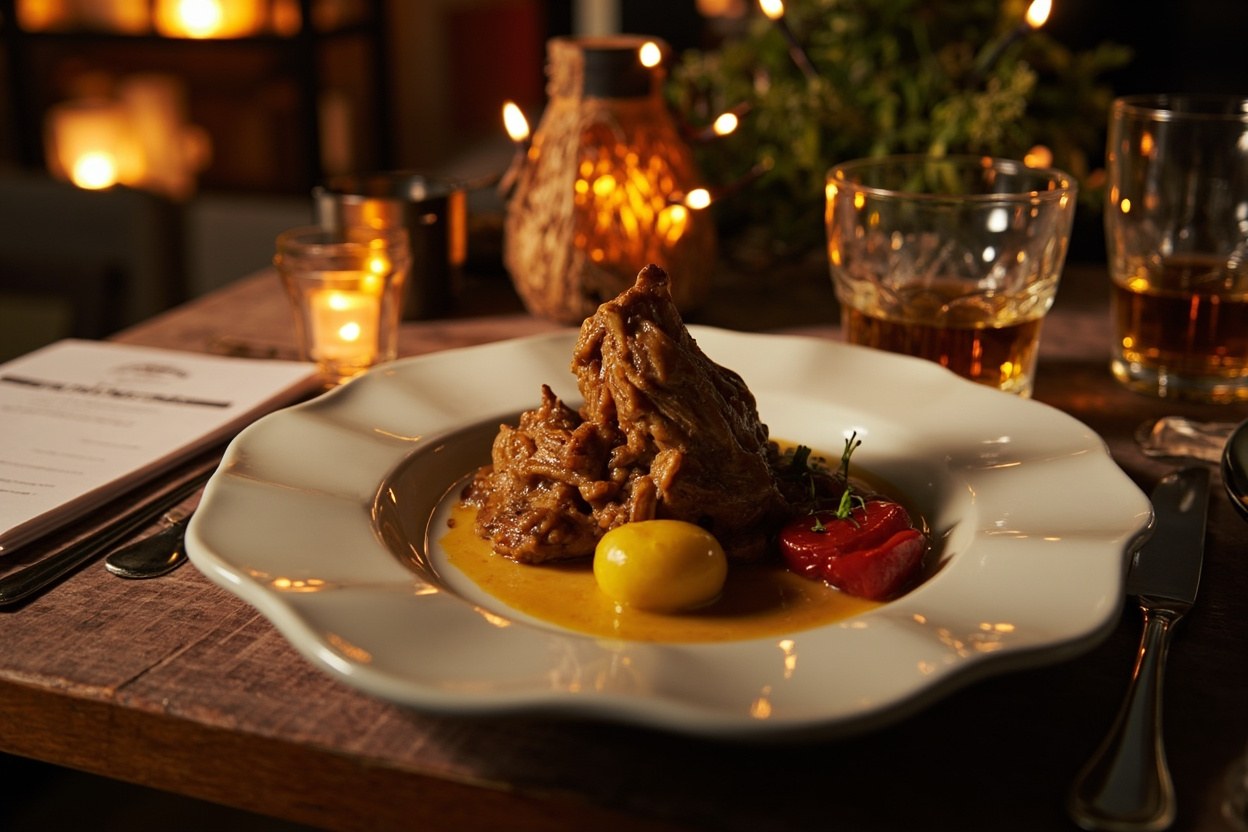
The classic recipe is short. A sheep's stomach is stuffed with a mix of sheep liver, sheep heart, sheep lung, oatmeal, onion, suet, salt, pepper and a little stock. The casing is the stomach itself, which is the part the US authorities object to. For Muslims, the more interesting questions are about the meat, the suet, the seasoning and the casing.
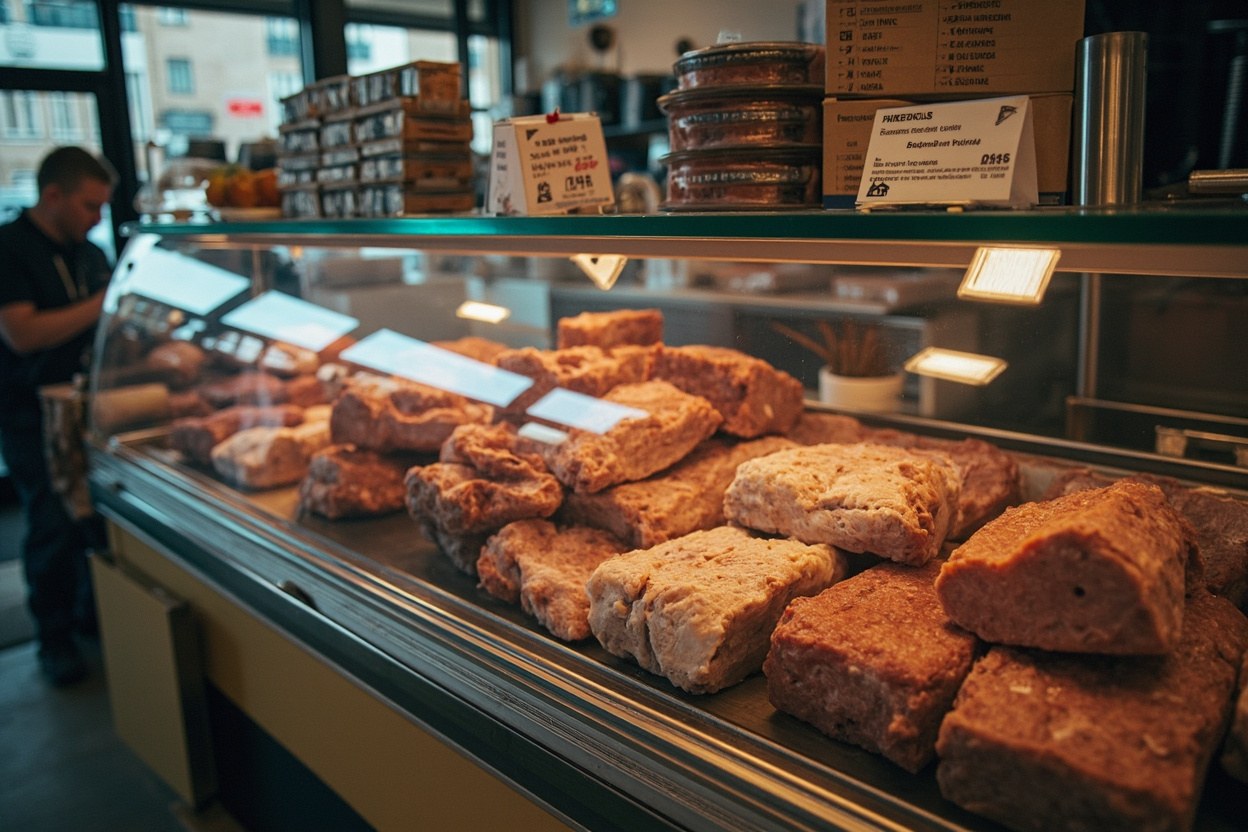
Meat: every cut has to come from an animal slaughtered according to Islamic rules, with the name of Allah spoken at the time of cut, a sharp knife, and a proper bleed. In the UK, that usually means the meat comes from a halal-certified abattoir, and the pack or butcher's sign will name the certification body. A halal logo on the front is not enough on its own, because logos can be applied to multi-product sites. Look for the abattoir number, often printed in tiny type on the back, and cross-check it on the certifier's website if you want to be thorough.
Suet: this is the hard fat around a sheep's kidneys. Suet is fat, not meat, so the slaughter rule does not technically apply to it in the same way. In practice, UK halal butchers source their suet from the same halal supply chain, so it is rarely a problem. If the pack says 'vegetable suet' or 'beef suet', that is a different ingredient and usually fine, but it does change the flavour and the texture.
Casing: a real traditional haggis uses a sheep stomach. Some halal butchers will swap this for a synthetic casing on request, partly because stomach casings are harder to source from a fully halal supply chain. Ask before you buy if this matters to you.
Seasoning: this is where modern haggis can quietly catch you out. Check the back of pack for 'whisky', 'sherry', 'stock' (which can contain wine), 'rennet' (animal-derived, usually from calf stomach), and any E-number you are not sure about. A 2025 reformulation by at least one major UK brand added a small amount of deglazed whisky to a Burns Night edition, which is a useful reminder that recipes drift even within a familiar brand.
Plant-based and 'haggis-style' versions, and how to read them
Plant-based haggis is the fastest-growing part of the category. Most versions are made from a mix of beans, lentils, oats, nuts, onion, vegetable suet and spices, and they are halal by default. Two things to watch.
First, the front of pack. Words like 'haggis', 'Scottish haggis' and 'haggis-style' are not regulated for flavour or composition, so a 'haggis-style' slice from a vegan brand can be very different from a traditional recipe. The UK is consulting on clearer rules for these descriptors in 2026, partly because shoppers were confused. For Muslims, the question is usually whether the word 'haggis' on the front means the product is genuinely trying to recreate the dish, which is what most plant-based brands do well.
Second, the ingredients panel. Look for alcohol in any form, including 'alcohol-free whisky flavouring' which can still contain trace ethanol, and for E-numbers you do not recognise. Common ones in plant-based haggis include E160a for colour, E392 for rosemary extract as a preservative, and E471 for mono- and diglycerides, which can be plant or animal derived. If the source is not specified, contact the brand. Most plant-based haggis brands are happy to confirm the source because their customers ask regularly.
Reading a 2026 haggis label in five quick checks
1. Look for a halal mark on the front. HMC, Halal Food Authority, IFANCA, JAKIM and ISWA are the main UK and international certifiers in 2026. A logo is a starting point, not a finish line.
2. Read the ingredients panel in order, looking for offal, suet, rennet, alcohol, and any E-number you cannot place. The IslamHood halal ingredient guides cover most of these, from E171 titanium dioxide to E443 brominated vegetable oil.
3. Check the country of manufacture and the abattoir number. UK haggis from a halal butcher will usually print both. Imported haggis, including from New Zealand, is also available halal but the supply chain is longer.
4. For plant-based haggis, check for alcohol in any form, including 'natural flavouring', and for E-numbers that may be animal derived. Most vegan haggis is halal by default, but it is worth the 30-second check.
5. If you are at a restaurant or a Burns Night event, ask the kitchen. A confident halal kitchen will tell you their butcher, their certifier and whether they can do a synthetic casing. A less confident kitchen will not.
Where to buy halal haggis in 2026
Halal haggis is more widely available than it was five years ago. Most large UK halal butchers will make haggis to order for Burns Night, and a few of them sell frozen halal haggis year-round. The supermarket options are thinner, partly because the big chains have not yet committed to a halal haggis line, and partly because US export rules mean a product made for the UK market often cannot be shipped across the Atlantic. If you are in the US, your best bets are Scottish or halal butcher specialists in New York, Chicago, the Bay Area and the larger Canadian cities, plus a small number of importers who ship frozen halal haggis online.
If you are cooking for a mixed table, the easiest path is to buy both. A halal traditional haggis for the Muslims at the table, and a plant-based haggis for the vegetarians and vegans, served with neeps and tatties. That is the Burns Night most Muslim households in 2026 will recognise, and it works without anyone spending the evening explaining labels.
Quick answers
- Can Muslims eat haggis at all?
- Yes, provided the meat and offal come from a halal-slaughtered animal and none of the seasoning or stock contains alcohol or animal-derived rennet from a non-halal source. A halal butcher will be able to confirm both.
- Is the US ban on haggis a religious question?
- No, the US ban is a food-safety rule introduced in 1971 because traditional haggis uses sheep lung, which the USDA does not permit for human consumption. It applies to all haggis sold in the US, halal or otherwise.
- Is plant-based haggis halal?
- Usually yes, because the ingredients are beans, lentils, oats, vegetables and spices. Check the label for any alcohol-based flavourings or animal-derived E-numbers, and contact the brand if the source is not specified.
- What is the difference between halal haggis and regular haggis?
- The recipe is essentially the same. The difference is the slaughter method, the abattoir, the certification body, and sometimes the casing if the butcher uses a synthetic one instead of a sheep stomach.
- Can I order halal haggis online?
- Yes, several UK halal butchers and a small number of importers ship frozen halal haggis within the UK and to parts of Europe, North America and the Gulf. Order early for Burns Night because the small halal producers tend to sell out by mid-January.
General information, not a fatwa. Where scholars differ, we try to say so. For your situation, ask a scholar you trust.