In the Pantry
Is Rock Salt Halal? A 2026 Pantry Guide for Muslim Cooks
Updated 6 October 2026
Most rock salt in a UK kitchen is just sodium chloride, but the bag in your hand in October 2026 may be more than crystals.
Why rock salt is mostly a non-question, and where it gets complicated
Salt is one of the few pantry staples that almost never comes up in a halal query. The reason is simple. Whether you are holding a block of Himalayan pink salt, a jar of Black Indian Kala Namak, or a bag of halite scraped from a mine in Cheshire, the main ingredient is the same mineral, sodium chloride. It was laid down millions of years before any animal walked the earth, and it is taken out of the ground with water and a machine. There is no fermentation step, no animal-derived processing aid, and no alcohol wash, so the core product is halal by default, not by certification.
The complication in 2026 is the modern supermarket shelf. A bag labelled “rock salt” can contain a number of things that are not, strictly, rock salt. Iodised table salt is sometimes sold in a coarse grind and called rock salt, which is fine for halal, but it does add potassium iodate, a synthetic source of iodine that some shoppers prefer to avoid. Anti-caking agents keep the crystals free-flowing in a humid kitchen, and the most common ones, sodium ferrocyanide E535, potassium ferrocyanide E536, and sodium aluminium silicate E554, are all synthetically produced minerals. They are generally regarded as halal by the major certifiers, but the absence of a clear source for the aluminium in E554 has been enough for a few smaller certifiers in South Asia to decline to certify salts that contain it.
Then there are the flavoured and smoked salts. Black Himalayan salt is sold in pouches and grinders, and so is Kala Namak, the sulphurous Indian black salt that gives vegan onion bhajis their eggy aroma. The black colour in Kala Namak comes from the kiln. The salt is packed with charcoal, harad seeds, and sometimes other plant material, then fired in a sealed clay kiln. None of that involves animal products, and reputable brands have always been considered halal. The newer concern, from about 2024 onwards, is “smoked” sea or rock salt, where the smoking liquid can be derived from wood, but in a small number of products the smoke aroma is rebuilt using animal-derived carrier oils or yeast extracts grown on animal peptone. Two product recalls in the EU in 2025 were connected to undisclosed fish-derived smoke condensates in flavoured salts, so it is no longer enough to assume that any bag that says “smoked” is plant-smoked.
Finally, there is the structural question of cross-contamination in the warehouse. Salt does not have allergens in the way that a chocolate bar does, because the major UK and EU allergens are proteins, and salt contains no protein. The real risk in a shared line is residue from a previous product, and the only way a factory would normally need to flag this is if the previous product was something like a meat-flavoured snack mix on the same line. That is rare for a salt producer, but it does happen with flavoured salts, and it is the kind of detail a halal certificate will mention if it has been audited.
Reading the 2026 label: what to look for, line by line
Turn the bag around. Most of the time the front will say “Rock Salt”, “Himalayan Pink Salt”, “Black Salt”, “Kala Namak”, or “Halite”, and the back will have a smaller ingredients panel. In the UK and EU, that panel is mandatory if anything has been added to the salt, and it will list iodine source, anti-caking agent, and any flavourings in descending order of weight. If the only word on the panel is “salt”, you are looking at a single-ingredient product and you can stop reading.
When the panel has more than one item, the most common second ingredient is an anti-caking agent, and that is where the first check lives. E535 sodium ferrocyanide, E536 potassium ferrocyanide, and E554 sodium aluminium silicate are the three you will see most often. They are used at very small concentrations, typically under 10 milligrams per kilogram, and they are mineral or inorganic salts made in a chemical plant rather than extracted from an animal. The Jamiat Ulama-i-Hind, the Halal Monitoring Authority in Canada, and the South African MJC have all ruled these acceptable, and there is no widely cited scholarly objection to them. If you are comfortable with a mainstream halal ruling, you can use these salts without a second thought. If your family follows a stricter line, choose a salt that does not list any anti-caking agent, and that is also easy to find in 2026 because several supermarket own-label ranges have moved to “no anti-caking agent” packaging to be safe.
Iodine is the next line. Most UK salts are not iodised, because the British approach has historically been to put iodine in bread, milk, and other staples rather than in table salt. Some imported Himalayan salts now carry iodine as a marketing line, and the source is almost always potassium iodate, which is a synthetic mineral and is halal. Iodine deficiency in children is a real concern, and switching from iodised to non-iodised salt is a decision worth raising with your GP rather than making on the basis of a label alone. For a family that cooks with rock salt as a finishing salt rather than a daily seasoning, the amount of iodine consumed is small, and either choice is reasonable.
The third check is the word “flavouring”. Salt labelled “smoky”, “bacon”, “hickory”, “tandoori”, or “BBQ” is now a regular shelf item in UK supermarkets, and the flavouring source is the single most important halal question on the bag. “Natural flavouring” in the EU has to be disclosed by source category from 2025 onwards, and the label will say “natural smoke flavouring”, “natural pork flavouring”, or “natural beef flavouring”. The first is plant or wood, the second and third are not halal. If the label simply says “flavouring” without a source, the product is either pre-2025 stock or non-compliant with the new disclosure rule, and is best left on the shelf until the brand updates the print run. The same rule applies to “yeast extract”, which is normally grown on molasses and is halal, but on a small number of old production lines was grown on animal-derived peptone. A halal certificate on the back of the pack is the cleanest answer here.
The fourth check is the certificate mark. A 2026 bag of rock salt is more likely than ever to carry one, because the major UK chains have been asking their salt suppliers for halal statements since 2023. Look for a familiar mark, the HMC, the HFA, the Jamiat Ulama mark on South Asian imports, or the new UKAS-accredited halal mark that appeared on British supermarket own-label products in late 2024. A mark is a stronger signal than a written “halal” claim, because the mark is tied to an audit and a traceable certificate number. A bare written “this product is suitable for Muslim consumers” with no body behind it is, in practice, a marketing line and not a guarantee.
Pink, black, grey and smoked: a 2026 variety-by-variety guide
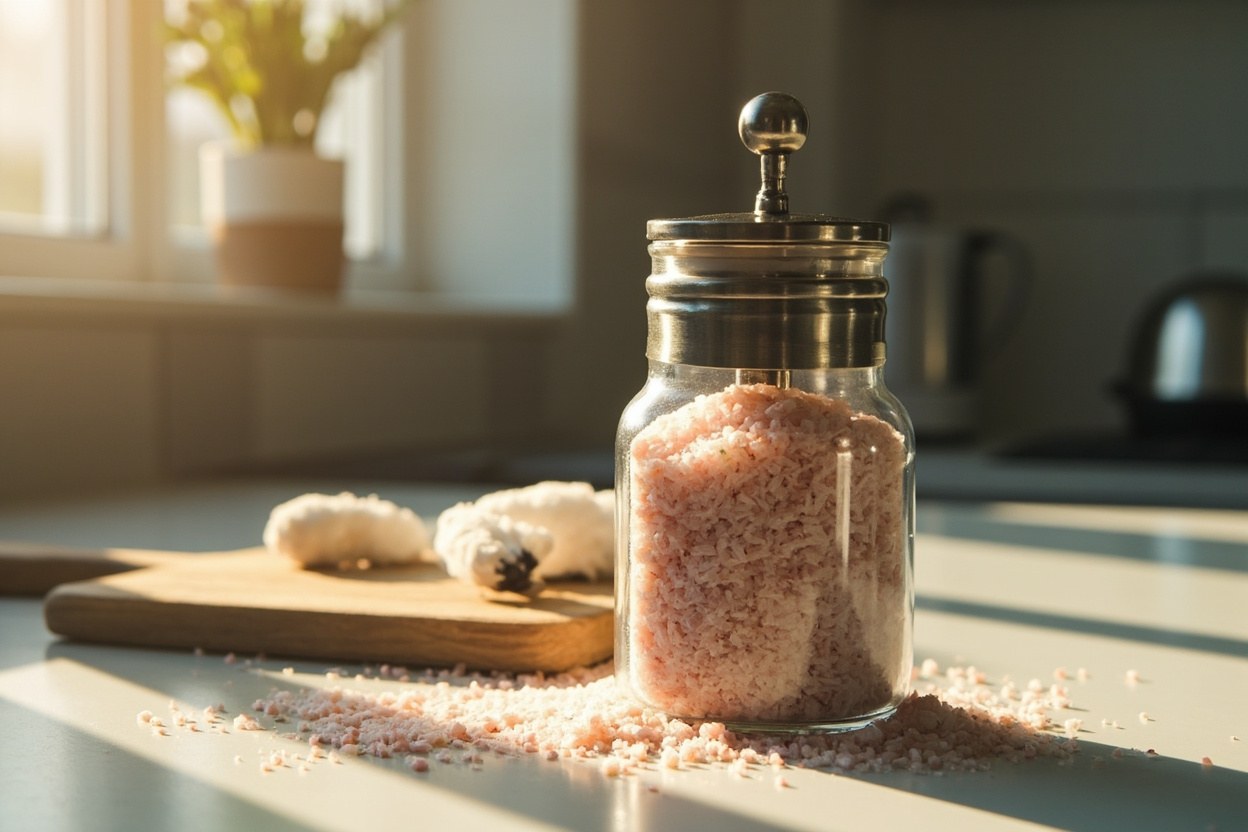
Himalayan pink rock salt is the most common bag on the shelf. It is mined in the Punjab region of Pakistan, washed, sorted by hand into pink, red, and off-white crystals, and crushed or ground to size. The pink colour comes from trace iron oxide, the same mineral that gives rust its colour, and there is no animal input. The Pakistan Salt Manufacturers Association has run a halal compliance programme since 2018, and most of the pink salt exported to the UK comes from a small number of audited mines. Where a concern does arise is in the grinding and packing stage. Some grinders in third countries share lines with seafood or meat-flavoured spice mixes, and a halal certificate is the only way to know that the line has been cleaned between runs. If the bag is from a brand you recognise and it carries a halal mark, you can use it freely.
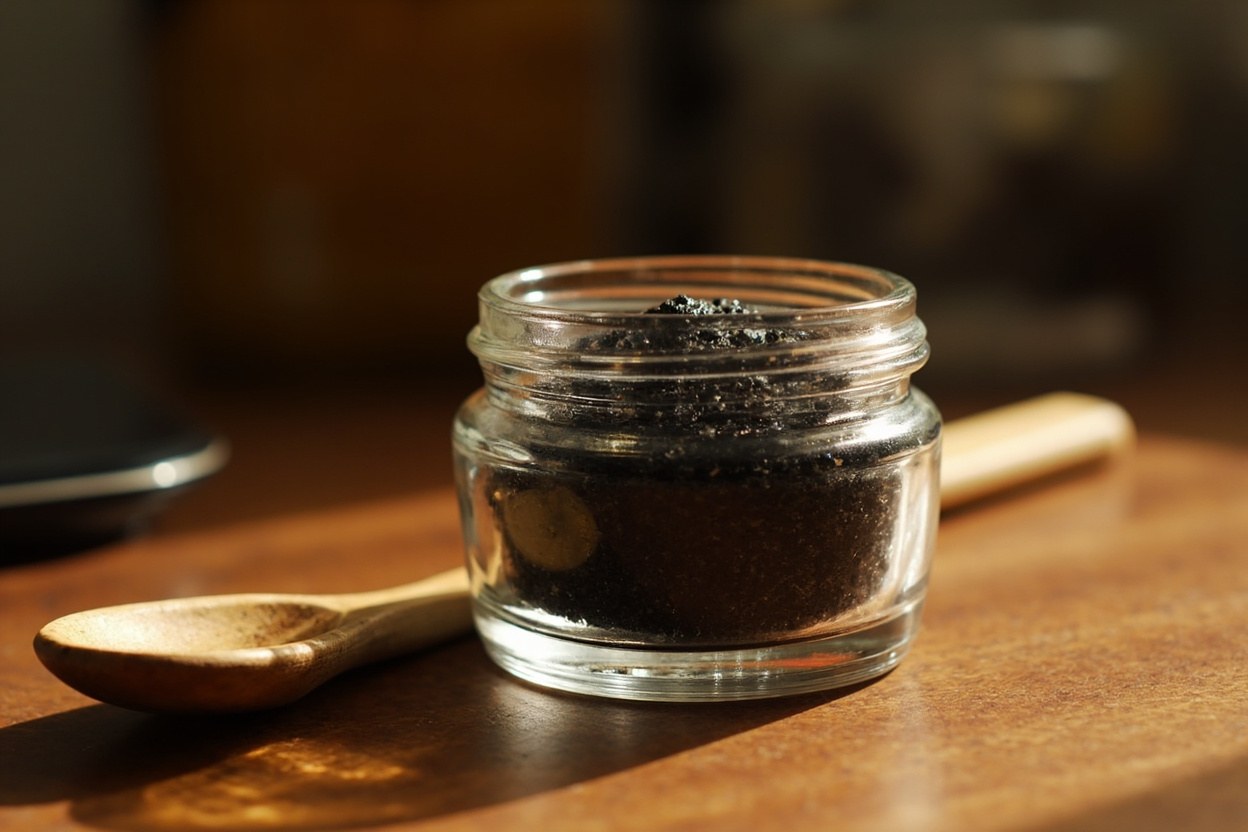
Black Himalayan salt, sold under the name Kala Namak or Sulemani Namak, is a different product. It starts as a pink or brown salt from the same Khewra range and is then fired in a kiln with charcoal, harad (Terminalia chebula) seeds, and at least one other plant material. The kiln step is what gives Kala Namak its high sulphur content and the soft-boiled-egg aroma that vegan cooks use as an egg replacement. The traditional recipe is plant-only, and the major Indian and Pakistani brands, including Tata and Shan, have halal certification on the Kala Namak line. The 2026 question is the small-batch artisanal Kala Namak sold in UK delis and on-line, where the kiln recipe is not always disclosed. A quick message to the producer, asking for the certificate, is the simplest check. If they cannot produce one, choose a different jar.
Welsh and Cheshire rock salt is the British answer to Himalayan pink, and it is sold in food-grade and bath-grade forms. Bath salt is for the bathroom and may contain fragrance oils that are not food grade, so it has no place in the kitchen even though the underlying mineral is the same. Food-grade British rock salt carries an anti-caking agent about half the time, and is otherwise a clean, single-ingredient product. The Whitstable and Cornish sea-salt makers have been halal-certifying their lines since 2024, partly because their products were being bought by Muslim shoppers for use in pickling and cheese-making, and a written “halal” statement on the back of the tin is now common.
Smoked rock salt and smoked sea salt are the bag to be careful with. The traditional way to smoke salt is to cold-smoke it over hardwood for several days, and that salt is halal because the smoke is plant-derived. The modern industrial way is to tumble the salt with a smoke condensate, and the condensate can be made from wood, from torula yeast grown on plant sugars, or from fish or meat. The EU recall of two smoked salts in spring 2025 for undisclosed fish condensate is the case study here. A smoked salt that carries a halal mark, or that says “wood smoked” on the front of the pack, is the safe choice. A smoked salt that says “natural smoke flavouring” without a source is, in 2026, a salt to leave on the shelf.
Flake salts with added herbs, garlic, chilli, or citrus zest are a final category. These are usually fine because the flavouring is plant, but the bag should say so. A lemon salt that lists “lemon oil” is fine, a lemon salt that lists “natural lemon flavouring” without a source is a bag to check before you cook with it, and a garlic salt that does not specify whether the garlic is fresh, dried, or oil-blanched is a bag to put down. None of these are common halal violations, but they are the kind of detail that a 2026 shopper is now expected to look at.
How to handle salt at home, and what to tell the rest of the family
The kitchen rule that has worked for Muslim households in the UK for a generation is to keep one shaker of plain, single-ingredient salt on the table, and to keep flavoured, smoked, and iodised salts in a separate jar, used only for the dish they are meant for. That rule still works, and it does not need a certification mark to be valid. Plain rock salt, in a grinder, in a jar, in a bag, is halal by default and is the right salt for everyday cooking, for brining, for baking flatbreads, and for finishing.
For a child’s lunchbox, the plain salt is also the right choice. The food that goes into the lunchbox is the more important question, and the salt is almost never the problem. If your child eats a school lunch, the catering team should be able to tell you which salt they use in the kitchen. If you are sending a packed lunch, a small pot of plain rock salt, or a pinch from a clean shaker, is enough.
For a household that follows a stricter line, the move in 2026 has been towards single-ingredient salts only, and away from anything with an anti-caking agent. The cost is roughly the same, because the supermarket own-label Himalayan range has been priced to compete with iodised table salt. Brands such as Sainsbury’s Basics Himalayan Rock Salt, Tesco’s British Rock Salt, and the Co-op’s single-source pink salt are all single-ingredient products and all carry a halal statement on the back of the pack as of October 2026. If you want a certified product, the Suma and Zaytoun brands both carry HMC certification, and they are available on-line and in independent wholefood shops.
For a household that follows a more relaxed line, the same supermarket own-label products are still the right answer, and the difference is that you are also comfortable using a salt with an anti-caking agent. The mainstream certifiers have ruled on these additives, and the ruling has not changed in 2026. The only exception, as above, is a flavoured or smoked salt where the flavouring source is unclear, and that is a question of the flavouring, not of the salt.
A short comparison table for the 2026 shelf
The table below pulls together the four main varieties of rock salt you are likely to see in a UK supermarket or wholefood shop in October 2026, and the default position for each. The “default” column is the position for a mainstream Muslim household; households following a stricter line will tighten the “check before use” column to “do not use”, and households following a more relaxed line will treat “check before use” as “use freely if the label is clear”.
Variety,Typical label,Default,What to check
Himalayan pink rock salt,"Salt","Halal by default","Anti-caking agent, certificate mark if from a smaller brand"
Kala Namak / black salt,"Salt, charcoal, harad","Halal by default","Certificate mark for small-batch UK imports"
Smoked rock or sea salt,"Salt, smoke flavouring","Check before use","Source of smoke: wood smoked is halal, natural smoke flavouring needs a mark"
Flavoured finishing salt,"Salt, herb or spice, flavouring","Check before use","Source of flavouring; avoid pork, beef, or undisclosed "natural""
Plain British rock salt,"Salt","Halal by default","Bath salt is for the bathroom, not the kitchen"
The table is a starting point. The actual answer for a specific bag is on the back of that bag, in the ingredients panel and in any certificate mark. The cleanest habit, in 2026, is to read the panel once before you put the bag in the basket, and to put the bag back if the panel lists a flavouring you cannot trace.
Where rock salt sits in the wider halal food questions of 2026
Salt is the simplest ingredient in the kitchen, and the rule for salt is the simplest rule: read the label, and use a certified brand if you have any doubt. The same rule is now being applied to a much wider range of ingredients in 2026, because the EU and UK disclosure rules have tightened and because more brands are choosing to carry a halal mark. For more on the broader question of E numbers in the kitchen, the IslamHood guide to E171 titanium dioxide and the guide to E407 carrageenan walk through two ingredients that are still on supermarket shelves in October 2026 and that carry the same kind of label questions as rock salt. For a drink that uses salt as a finishing ingredient, the guide to MSG E621 is a useful companion. For a baking question, the whole wheat bread label guide sits in the same kitchen corner. For a question on the protein side of the plate, the whey protein page covers the dairy side of the label.
For a quick check on the table, the IslamHood zakat calculator and the hawl explainer are the right starting points if your question has moved on from the salt cellar to the annual giving. Salt does not, of course, count as a zakatable asset, and the nisab page at nisab in 2026 covers the silver and gold thresholds. None of these are the same question, but the habit of reading the small print, asking the brand, and choosing a certified product where you can, is the same habit for all of them.
Quick answers
- Is plain rock salt always halal?
- Yes. Single-ingredient rock salt is a mined mineral with no animal or alcohol step, and is halal by default. The question is only on flavoured, smoked, or blended salts, where the additive list needs a closer look.
- Are anti-caking agents like E535 and E536 halal?
- The mainstream UK and EU certifiers, including HMC, HFA, Jamiat Ulama-i-Hind and the South African MJC, regard sodium ferrocyanide E535, potassium ferrocyanide E536 and sodium aluminium silicate E554 as halal. Households following a stricter line may still prefer a salt without them, and several own-label ranges in 2026 are anti-caking-free.
- Is Kala Namak black salt halal?
- Kala Namak is a kiln-fired salt made with charcoal and plant seeds, and the major Indian and Pakistani brands have halal certification. Small-batch UK imports should carry a halal mark, or be checked with the producer before use.
- Can I use smoked rock salt?
- Only if the label says wood smoked, or if the bag carries a halal mark. Smoked salts that list “natural smoke flavouring” without a source were the subject of EU recalls in 2025 for undisclosed fish-derived condensates, and the safe choice in 2026 is a clearly labelled wood-smoked salt or a certified brand.
- Is Himalayan pink salt better than sea salt for halal cooking?
- Both are halal by default. The choice between them is about taste and trace minerals, not about halal status. A household that wants a single-ingredient salt with no anti-caking agent can pick either, as long as the bag is single-ingredient.
General information, not a fatwa. Where scholars differ, we try to say so. For your situation, ask a scholar you trust.