Pantry
Is Oat Milk Halal in 2026? A Carton Label Guide for Muslims
Updated 23 October 2026
If oat milk is in your weekly shop, here is the short version: check the ingredient list for enzymes, the back panel for shared line warnings, and the certifier mark, not the word natural on the front.
What is in a typical UK oat milk in 2026
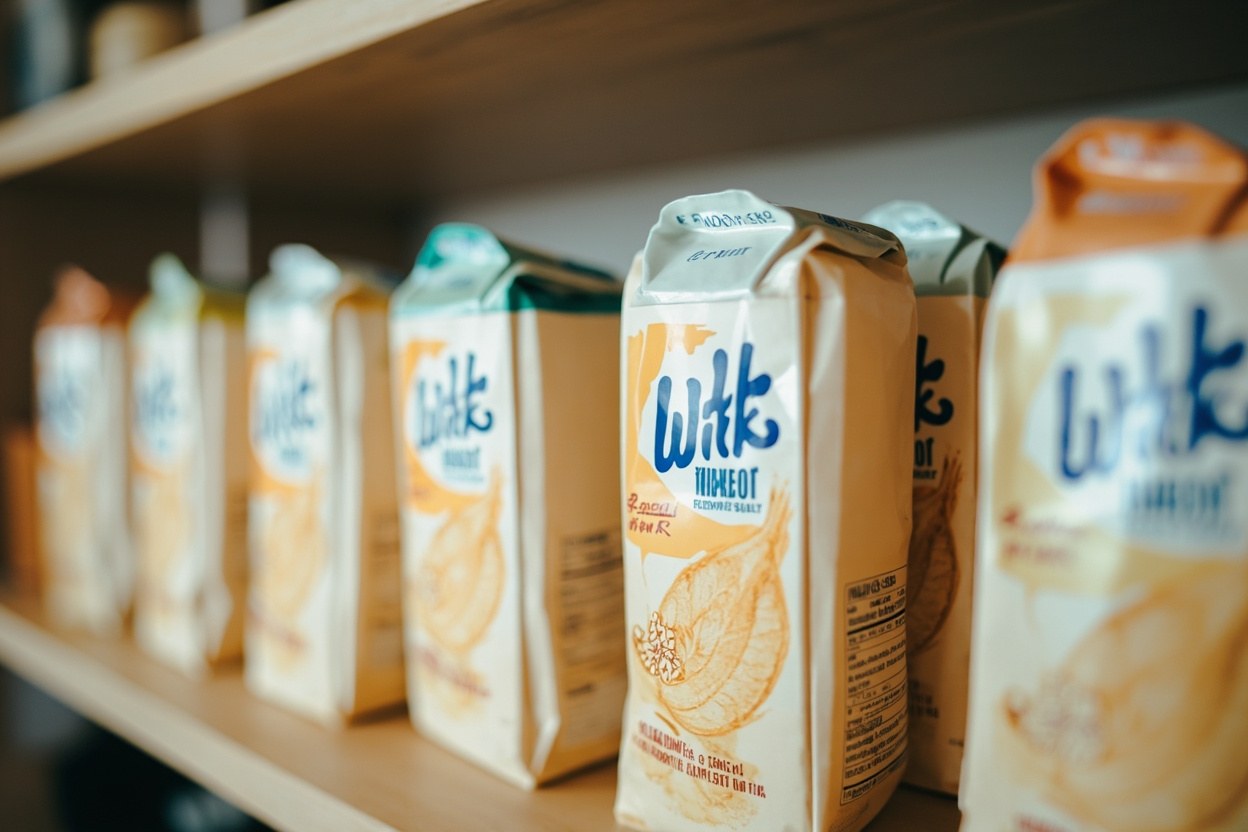
Walk down the long life aisle of any major UK supermarket in late 2026 and you will see a small crowd of oat milks: Oatly, Alpro, Minor Figures, Califia Farms, MOMA, Plenish, and the supermarket own labels (Tesco, Sainsbury's, Asda, Lidl Vemondo, Aldi, Co-op, Waitrose). Most of them carry the same skeleton on the back of the carton: water, oats (somewhere between 8 and 14 percent), a plant oil such as rapeseed or sunflower, calcium carbonate (E170) for fortification, a calcium salt, salt, sometimes a sweetener, and a vitamin mix that usually contains vitamin D2 or D3, riboflavin (E101 or B2), and vitamin B12.
The halal worry rarely lives in the water, the oats, or the rapeseed oil. It lives in the small print that says things like enzyme, stabiliser, D3 from lanolin, or natural flavouring. Two ingredients do most of the work in turning a plant drink into something closer to dairy: amylase, which breaks the oat starch into sugars so the milk tastes sweeter without added sugar, and a gum such as gellan gum (E418) or locust bean gum (E410), which keeps the liquid from splitting in your cup of tea. Both are usually microbial or plant based. Both can, in a worst case scenario, be derived from animal broths during fermentation. Without a halal mark, you cannot tell which path the manufacturer took.
Here is what to scan for on a typical 2026 UK carton, and where the halal question sits in each row.
| Ingredient or E number | What it does | Common source | Halal question in 2026 |
|---|---|---|---|
| Oats | The base | Plant | None if certified gluten free or processed on a wheat free line for coeliac users |
| Rapeseed or sunflower oil | Body and mouthfeel | Plant | None, though check for shared refinery |
| Calcium carbonate (E170) | Calcium fortification | Mineral | None, mineral derived |
| Tricalcium phosphate (E341) | Calcium fortification | Mineral | None, mineral derived |
| Amylase (enzyme) | Breaks starch into sugar | Microbial, fungal, or rarely animal | Source unclear without certifier mark |
| Lipase | Breaks fats | Microbial or animal | Rare in oat milk but worth a glance |
| Gellan gum (E418) | Stabiliser | Microbial fermentation | Usually fine, but fermentation medium can be animal based |
| Locust bean gum (E410) | Stabiliser | Plant (carob) | None |
| Dipotassium phosphate (E340) | Emulsifier salt | Mineral | None |
| Riboflavin (E101 or B2) | Vitamin B2, colour | Microbial or synthetic | Usually fine, but check for E101(i) versus E101(ii) |
| Vitamin D2 (ergocalciferol) | Vitamin D | Plant or fungal | None |
| Vitamin D3 (cholecalciferol) | Vitamin D | Often lanolin from sheep wool, sometimes lichen | Real halal question, especially in UK where D3 is still mostly lanolin |
| Vitamin B12 (cyanocobalamin) | Vitamin B12 | Microbial fermentation | None |
So the two rows that deserve a second look are amylase and vitamin D3. Everything else is either mineral, plant, or microbial, and that is the working assumption most UK certifiers take when they sign off an oat milk.
Vitamin D3 in oat milk: the lanolin question most people miss
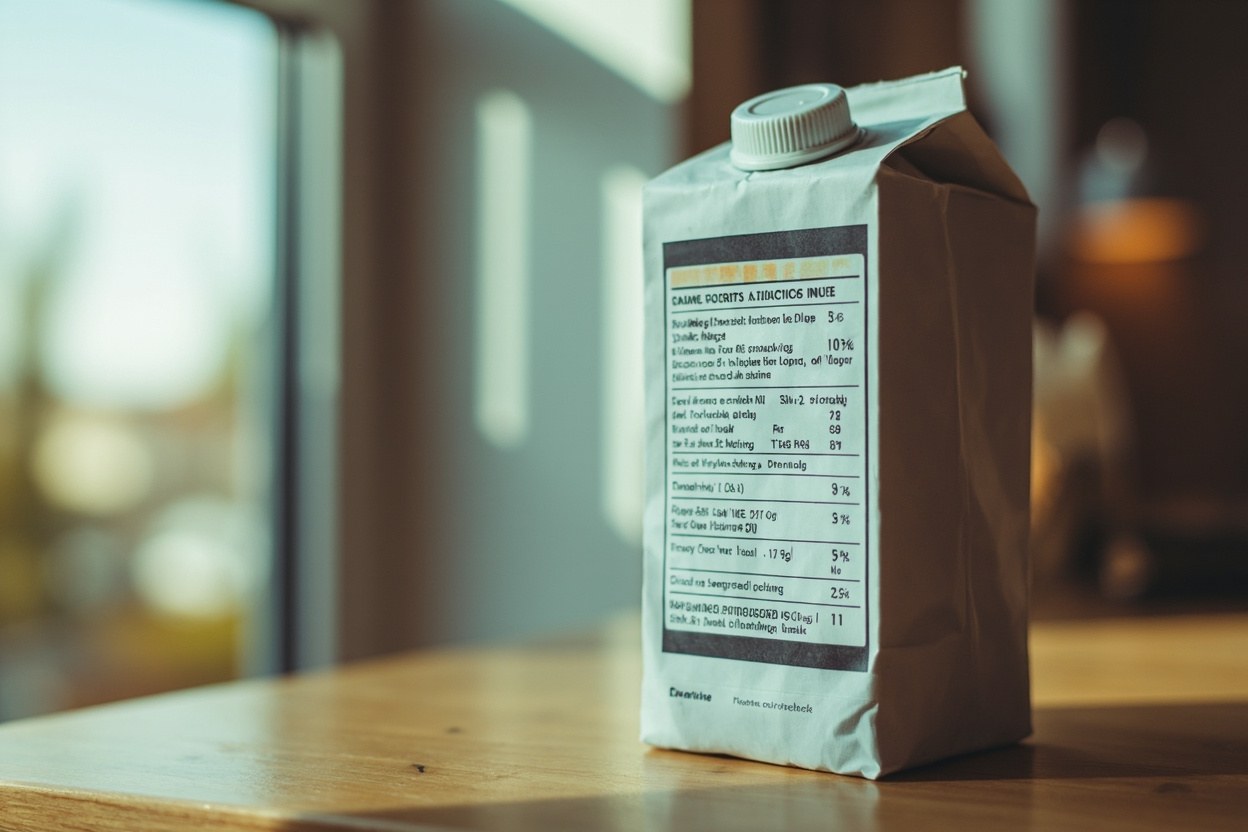
Vitamin D3 is the single most common source of confusion in fortified plant milks in 2026, and oat milk is no exception. The form that ends up in most UK cartons is cholecalciferol, and the cheapest way to make it is to extract lanolin from sheep wool, then expose the lanolin to UV light. Lanolin itself is a fat, not an animal part in the meat sense, so opinions differ on whether it is halal or simply makruh. UK certifiers such as Halal Monitoring Committee (HMC) and Halal Food Authority (HFA) generally accept D3 from lanolin when the source animal is halal slaughtered, but they want that chain documented. Vegan certifiers, by contrast, refuse lanolin and ask for lichen derived D3 instead.
What this means for your oat milk carton: if the label just says vitamin D, you are looking at either D2 or D3 and the manufacturer is not telling you which. If the label says vitamin D2, you can relax. If the label says vitamin D3 from cholecalciferol and the brand is vegan certified, the source is almost certainly lichen and the milk is halal. If the label says vitamin D3 and the brand is not vegan or halal certified, the most likely source is lanolin, and you are back to trusting the certifier mark on the front.
Two UK examples at the time of writing in October 2026 helpfully spell this out. Minor Figures Oat Mlk lists vitamin D2 on its UK carton, and Oatly (UK production) lists vitamin D from cholecalciferol, which is lanolin derived unless the carton is the vegan labelled Swedish import. That is exactly the kind of detail the label does not hide, but it is on the back in tiny type.
Enzymes, flavours, and the word natural on the front
The word natural on the front of an oat milk carton is, legally, a marketing word. The detail is in the back, under ingredients, and the two lines that carry the most weight for halal are the enzyme line and the natural flavouring line.
Amylase is the enzyme used in almost every oat milk to convert starch into maltose, which gives the milk its mild sweetness even when no sugar is added. Most UK brands now specify microbial amylase, which means a fungus or bacterium is doing the work in a stainless steel tank, and the source is halal by default. The risk comes from cheaper production methods that use porcine or bovine amylase. UK labelling law does not require the source animal to be named, only the function. So a carton that simply says enzyme, without halal certification, leaves a real gap.
Natural flavouring covers a wide range of compounds, from vanillin made in a lab to fruit extracts. In oat milk, natural flavouring is usually a vanilla or caramel note, and the carrier solvent is the question. The most common carrier is ethanol, which we have covered separately. If the carton lists ethanol or alcohol as a carrier for natural flavouring, see the linked guide for a deeper read.
Finally, watch for shared line warnings. Most UK oat milks are made on lines that also run almond, soy, and sometimes coconut drinks. Nut cross contamination is a real allergy issue, not a halal issue. The halal issue is the rare line that also runs a flavoured dairy drink. In 2026 this is unusual in the UK, but the warning will be in the small allergy panel: may contain milk, or produced in a facility that handles milk. If you see that line, and the brand does not carry a halal certifier mark, treat it as inconclusive.
Which UK supermarket oat milks are openly halal certified in October 2026
Halal certification is brand by brand, not category wide, and the UK picture shifts every quarter. As of October 2026, the following oat milks are openly halal certified in the UK by a recognisable UK or EU body. Treat this as a snapshot, not a long term promise, and always check the pack for the certifier mark and an expiry date on the certificate.
Oatly Barista Edition sold in UK supermarkets carries HMC or HFA certification depending on the production site. The UK produced barista version is the one to pick, and the mark is on the side of the carton. Minor Figures Oat Mlk is HMC certified for the UK barista version, and the mark is on the cap. Alpro plant based drinks, including the oat range, are halal certified by HFA across most UK supermarket listings. MOMA oat milk in UK production is HFA certified. Califia Farms Oatmilk sold in the UK is halal certified by IFANCA for the UK distribution channel. Among supermarket own labels, Tesco Plant Chef Oat Drink, Sainsbury's Plant Pioneers Oat Drink, and Asda Plant Based Oat Drink are HFA certified, while Lidl Vemondo Oat Drink is halal certified by the European Halal Authority for UK distribution. Aldi Mlk Oat Drink and Co-op Irresistible Oat Drink are halal certified by HFA. Waitrose Plant Lab Oat Drink has carried HMC certification since 2025.
Two brands that show up in UK searches but are not halal certified for the UK in October 2026 are Plenish Organic Oat Milk, which is vegan only, and Rude Health Organic Oat Drink, which is also vegan only and does not list enzyme sources. Vegan certification is a strong signal that no animal enzymes, lanolin, or dairy contact was used, so a vegan mark is a helpful fallback when no halal mark is present. A vegan mark is not the same as a halal mark, but for a product like oat milk where the raw materials are already plant based, the practical gap is small.
A quick decision tree for the next carton you pick up
Here is the workflow I would use standing in the aisle. First, look at the front of the carton. Is there a halal certifier mark, an HMC crescent, an HFA tick, an IFANCA M, or a European Halal Authority stamp. If yes, the milk is halal for the life of that certificate, which is usually one to two years, and you are done. If no, flip the carton and look at the ingredients. Read the vitamin line first. If it says vitamin D2 or vegan, you are safe. If it says vitamin D3 and no source, lean on the rest of the panel. Look at the enzyme line. If it says microbial enzyme or fungal enzyme, you are safe. If it just says enzyme, or if the line is missing entirely, that is the gap. Look for any milk or lanolin mention in the allergy panel. If milk is mentioned and there is no halal mark, the line shared dairy and the answer depends on your own strictness.
For a home where the family is comfortable with microbial enzymes, vegan style lanolin free D3, and shared production lines that do not touch pork, the practical answer in October 2026 is that almost every UK supermarket oat milk is fine. For a home that wants a documented certifier mark on every carton, the list above is your shortlist. Both positions are reasonable, and the label, read closely, is enough to decide between them.
One final tip. The Halal Monitoring Committee publishes a list of certified products on its website and updates it roughly every month. The Halal Food Authority does the same. If the carton does not have a mark you recognise, a thirty second check on the certifier's site will tell you whether the specific SKU is on the list, because the same brand can have one product halal and another not.
Quick answers
- Is oat milk halal without a halal mark on the carton?
- In most UK cases the ingredients are halal by default, but enzymes and vitamin D3 sources are not always named. If your family wants a documented answer, pick a brand that carries a UK certifier mark such as HMC, HFA, or IFANCA.
- Is vitamin D3 from lanolin halal?
- UK certifiers generally accept lanolin derived D3 when the source animal is halal slaughtered and the chain is documented. Vegan certifiers reject lanolin and require lichen derived D3. Read the back of the carton to see which one your oat milk uses.
- Is Oatly halal in the UK?
- The UK produced Oatly Barista Edition is halal certified by HMC or HFA depending on the production site, and the mark is on the side of the carton. Other Oatly SKUs sold in the UK are not all halal certified, so check the specific pack.
- Is barista oat milk different from regular oat milk in halal terms?
- The barista version usually contains more rapeseed oil and a stronger stabiliser system to hold up under steam. The halal question is the same: it comes down to the enzyme source, the vitamin D source, and the certifier mark, not the oil content.
- Can children drink oat milk that is not halal certified?
- If your family requires a halal mark for every food, choose a brand from the list above. If your family accepts microbial enzymes and lanolin free D3 as halal by default, plain UK supermarket oat milk is generally acceptable, and the bigger concern for children is whether the milk is fortified with calcium and B12, not the halal status of the enzymes.
General information, not a fatwa. Where scholars differ, we try to say so. For your situation, ask a scholar you trust.