In the Pantry
Is Banza Pasta Halal? A 2026 Label Guide for Muslims
Updated 6 October 2026
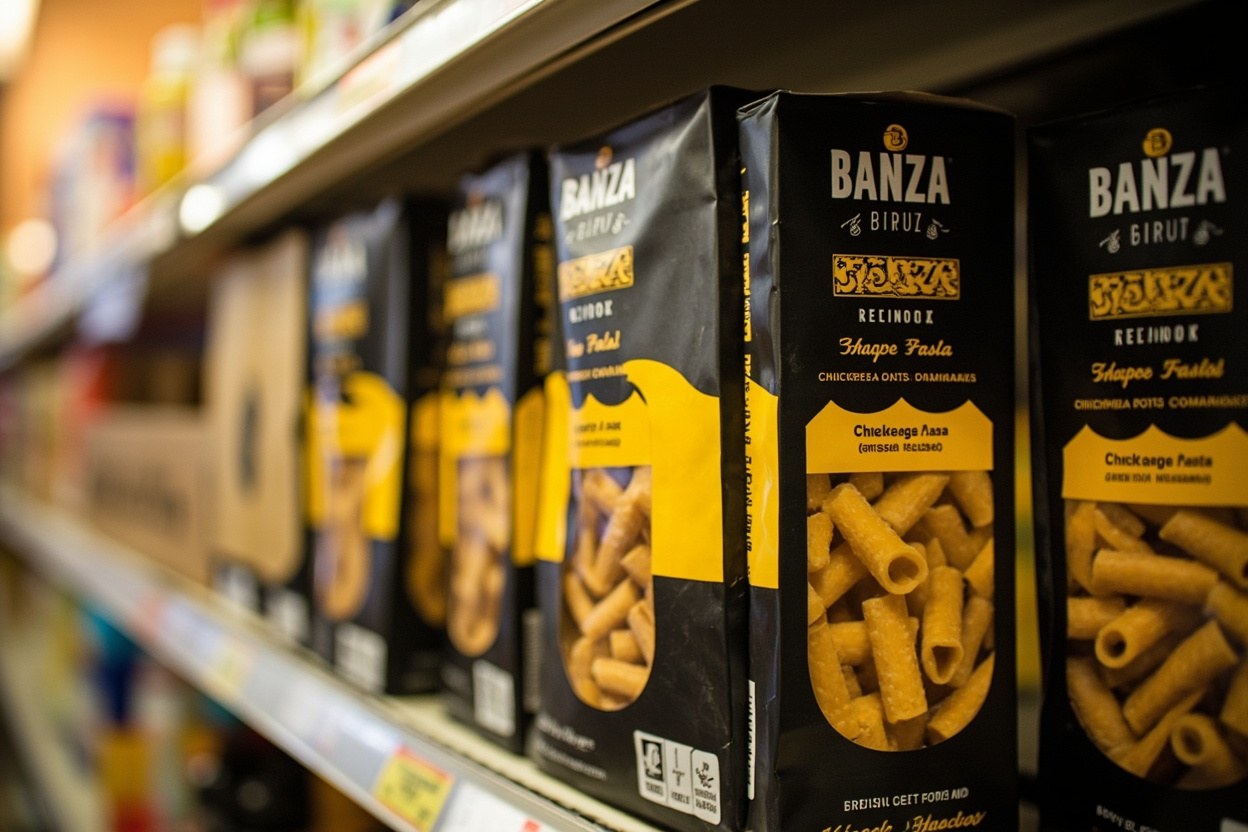
If you have spent any time in an American supermarket pasta aisle in the last five years, you have seen the yellow and black Banza box, and you have probably wondered once whether chickpea pasta counts as a simple yes on the halal list.
What Banza is, and why the question comes up so often
Banza is a US food brand built around chickpea based pasta, and over the last few years the boxes have spread from Whole Foods shelves into mainstream grocery, club stores and meal kit lines. The pitch is simple: pasta made from legumes instead of durum wheat, with more protein and more fibre per serving than the semolina versions that have sat on shelves for a century.
The reason Muslim shoppers keep asking the question is that chickpea pasta sounds, on paper, like an easy product. The base ingredient is a legume. The brand leans on short ingredient lists. There is no pork, no wine, no obvious animal derivative in the headline ingredient. For families trying to cut back on ultra processed wheat, or for anyone cooking for a guest with gluten sensitivity, Banza has become a default box to keep in the cupboard, which is why the halal question comes up at the kitchen table rather than in a fatwa office.
As of October 2026, the brand sells a small range of pasta shapes, a chickpea rice product, a waffle, a pizza and a few ready meals. The pasta line is the part of the catalogue that shows up in the search, so the rest of this guide focuses there, with a short note on the adjacent products at the end.
The 2026 ingredient list, line by line
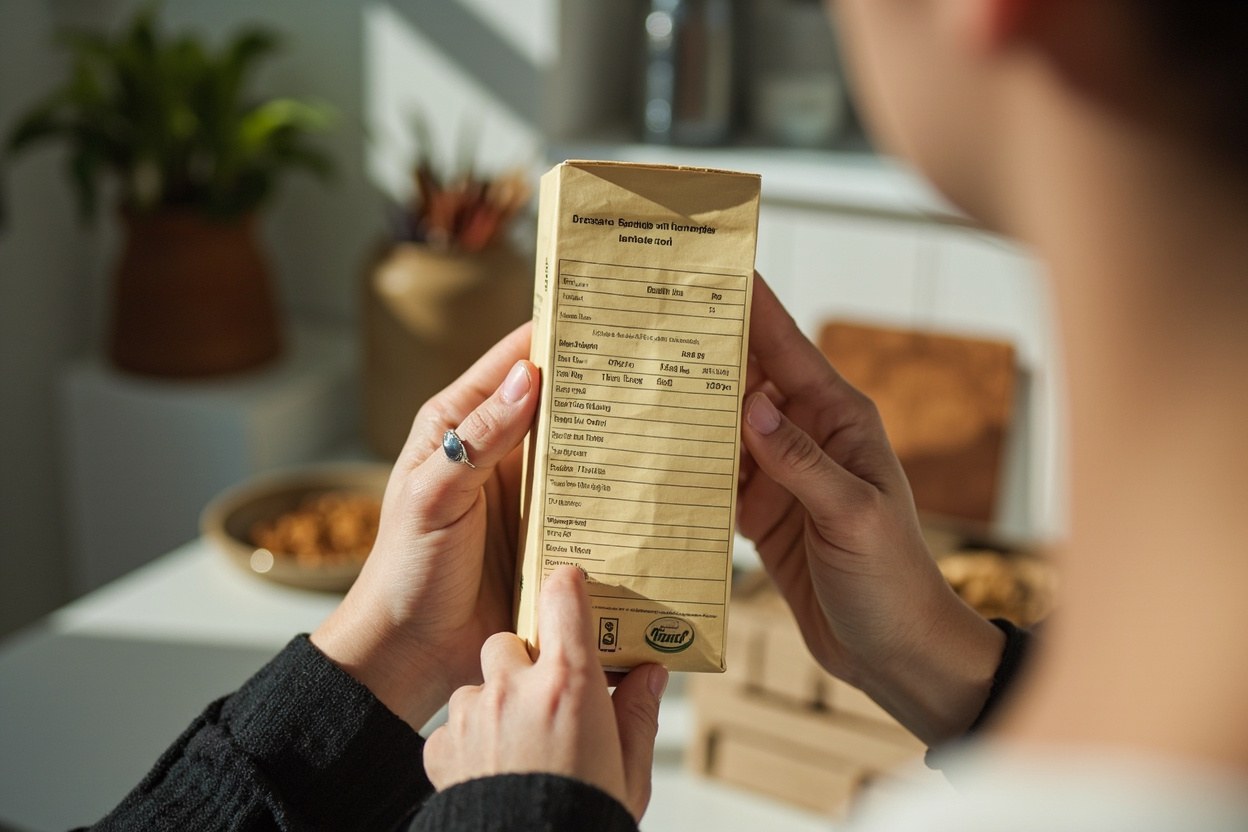
The honest way to answer the Banza question is to read the deck, so here is what the company prints on its chickpea pasta boxes in 2026, with a note on each line. Banza does publish the same deck on the product pages and on the back of the pack, and the wording has stayed close to this for several product cycles.
- Chickpeas. The main ingredient. Plant based, no halal or haram concern in itself, and the source of the protein and fibre that the brand markets.
- Pea starch. Used as a binder to give the pasta structure. Plant based, and not a flagged ingredient in mainstream halal certification schemes.
- Pea fibre. Adds fibre and helps the texture. Plant based, no animal input at the ingredient level.
- Tapioca starch. A common thickener in gluten free pasta. Plant based, from cassava root.
- Monk fruit extract. A non caloric sweetener used in some of the flavoured varieties such as the mac and cheese kit. Plant based.
- Natural flavour. This is the line that most often worries shoppers, because the word "natural flavour" is not a description. It is a category that can legally include a wide range of inputs. In a US product, if the flavour system included alcohol as a carrier, the company would have to declare it, and Banza does not. If the flavour included animal derived stocks, the company would not have to declare it under current FDA labelling rules, which is why the halal question on this line never fully closes without a statement from the brand.
- Egg whites. Present in Banza's rigatoni and in some flavoured kits, and clearly declared. Egg whites are halal when they come from a halal slaughtered bird, and haram to a stricter reading if the source bird is unknown. In a US mainstream product, egg whites are typically from caged laying hens, and the slaughter method is not described on the label.
- Salt, spices, herbs. The remaining lines are plant based and straightforward.
Read across the list, the basic chickpea penne and rotini boxes are vegan in their ingredient deck, and the egg white variants are clearly labelled as containing egg. There is no pork, no gelatin, no animal fat other than the egg, and no alcohol declared.
What halal certification Banza does, and does not, hold
This is the part of the question that does most of the work. A Muslim shopper can read the ingredient list in two minutes, and the bigger question, in 2026, is whether a recognised third party has audited the line and signed the pack off.
As of October 2026, Banza does not display a halal certification mark from a recognised body on its US packaging. The brand is not on the public certified lists of IFANCA, the Islamic Food and Nutrition Council of America, or the Halal Monitoring Authority, and it is not on the list of products audited by the Canadian Halal Food Certifying Authority or the South African MJC. Banza has, from time to time, posted statements on its social channels about being suitable for a vegan diet, and the brand is vegan certified by Vegan Action in the United States, which is a different scheme and a different standard.
That is a meaningful gap. A vegan mark tells you that no animal product is in the ingredient list. It does not tell you how the eggs were sourced, whether the cleaning in place shared line sees a non halal product, whether alcohol is used as a processing aid that does not have to be declared, or whether the chickpea lot is stored in a facility that also handles a haram input. These are the questions that a halal auditor walks the line to answer, and Banza, at the time of writing, has not invited that auditor onto the line for its US production.
For Muslim shoppers, the practical reading is: the box is plant based in its ingredient deck, the brand has not gone through halal certification, and the decision is yours based on your own standard.
The shared line and cross contamination question
Most pasta in the United States, including the standard semolina brands, runs on shared lines in large co packing facilities. The risk for a halal shopper is not usually the ingredient deck, it is the shared line, because a co packer that runs a regular wheat pasta in the morning and a chickpea pasta in the afternoon may not run a full clean down between products. The same applies to packaging lines that handle other SKUs.
Banza, like most of its peers in the gluten free pasta category, uses co packers in North America, and the company has not, in its public materials, disclosed the names of those co packers or the cleaning protocols. That is not unusual for a brand of this size, and it is also not a clean answer for a shopper who treats line segregation as a condition for a halal judgement. If you are the kind of shopper who only buys product with a halal mark, the gap is the gap. If you are the kind of shopper who is comfortable with a plant based product from a brand that does not handle pork, the gap is smaller.
One useful check is to call the brand through the contact form on its website, ask whether the production lines are also used for any product that contains animal derived ingredients, and ask whether alcohol is used as a processing aid. Banza's customer service team has, in past correspondence reported by readers, confirmed that the chickpea pasta lines do not run on lines that also produce a pork containing product, and that alcohol is not used as a processing aid on the chickpea pasta. Treat that as a customer service statement rather than an audited position, and weigh it accordingly.
Banza's flavoured kits: mac and cheese, pasta meals, the egg question
The plain chickpea pasta boxes are the easy part of the question. The flavoured kits are where the conversation gets longer.
The Banza mac and cheese kit, sold in the yellow box with a cheese powder sachet, contains a cheese powder that is typically made from a real cheddar. The ingredient list on the kit declares milk and, in some versions, egg. The cheese is a standard dairy cheese, and the egg, where present, is the same unstated source as the plain egg white pasta. If you are shopping for a family that only eats halal red meat and is comfortable with dairy from non zabiha animals, the mac and cheese kit sits within that allowance. If your household applies a stricter read on dairy, the kit is out.
The chickpea rice product, sold in a pouch, is closer to the plain pasta: chickpeas, pea starch, salt, and not much else. The pizza and waffle products in the Banza range sit outside the scope of this guide because the ingredient deck widens, but the brand does publish the deck on each product page, and the same rules of reading apply.
How Banza compares to other gluten free and legume pastas on the halal list
It helps to put Banza next to the other chickpea and lentil pastas you will see on a 2026 shelf, because the halal question lands differently on each one.
| Brand and shape | Base | Egg or dairy on deck | Halal certifier on pack | Typical reading |
|---|---|---|---|---|
| Banza chickpea penne | Chickpea, pea starch | No egg, no dairy | None on US pack | Plant based deck, no third party halal mark |
| Banza rigatoni | Chickpea, pea starch | Contains egg whites | None on US pack | Halal depends on egg source and your read |
| Tolerant Foods red lentil penne | Red lentil | No egg, no dairy | None typically | Single ingredient, plant based, no cert |
| Barilla Protein+ | Wheat, pea, lentil | May contain egg | None on US pack, halal certified in some export markets | Check the box, check the market |
| Explore Cuisine edamame spaghetti | Edamame | No egg, no dairy | None on US pack | Single ingredient, soy legume, no cert |
| De Cecco chickpea pasta | Chickpea | No egg, no dairy | None typically | Italian brand, simple deck, no cert |
| Jovial cassava and chickpea pasta | Cassava, chickpea | No egg, no dairy | Some retail lines carry a local certifier | Worth a closer look, varies by store |
The wider point is that the gluten free and legume pasta shelf is mostly a shelf of short ingredient lists without halal marks, and Banza sits comfortably in the middle of that group on the deck, rather than at either end.
A practical checklist before you put the box in the trolley
If you are standing in the aisle, or about to add a Banza box to a delivery order, here is the short version of the read.
- Check the shape. Penne, rotini, elbows, shells, and spaghetti are made without egg. Rigatoni and a few of the flavoured kits contain egg whites.
- Check the box for a halal symbol. As of October 2026 there is no third party halal mark on the US packaging, so the absence is not a warning, it is just the current state.
- Check the store. Some independent halal grocers in the United States and Canada repack or relabel a small range of pastas under a local halal certifier, and that relabelling can put a mark on the same product. If the box in your trolley has a sticker, that sticker is the read that matters.
- Check your own standard. If your household applies a strict egg source rule, the rigatoni is out unless you have a statement. If your household reads a plant based deck from a brand that does not handle pork as a sufficient read, the plain pasta boxes are in.
- Check the source over time. Brands add and drop halal certification, and the Banza decision in October 2026 may not be the Banza decision in 2027. The company site and the major certifier lists are the two places to watch.
Where to look next, and what to do with the Banza box at home
For households that have already bought a few boxes of plain Banza and want a calm read on the kitchen table, the working position in 2026 is that the chickpea pasta is plant based in its ingredient deck, the brand is not third party halal certified in the United States, and the line segregation question is a customer service statement rather than an audited position. That is enough to land a meal for many Muslim households, and it is not enough for others. Both readings are honest, and the decision belongs to the shopper.
If you want to keep the option open while you read further, the Banza website lists the customer service contact on each product page, and the major certifier lists at IFANCA, the Halal Monitoring Company in Canada, and the MJC in South Africa are worth a quick check on the brand name. A 2026 household that wants to use a small range of Banza shapes and rotate in a certified legume pasta on the side will have an easy shelf, and a household that wants a single audited brand for every shape will need a different shelf. Both shelves are reasonable, and the Banza read is short enough to do with a cup of tea and a label.
Quick answers
- Is Banza pasta halal in 2026?
- The ingredient deck on the plain chickpea pasta is plant based, but Banza does not carry a third party halal mark on its US packaging in October 2026, so the decision rests on the shopper's own standard rather than on a printed certificate.
- Does Banza contain egg?
- The plain penne, rotini, elbows, shells and spaghetti are made without egg, while the rigatoni and some flavoured kits contain egg whites that are clearly declared on the label.
- Is Banza vegan?
- Banza is vegan certified in the United States by Vegan Action, which confirms the ingredient list is plant based, although the mark does not cover halal questions such as line segregation or processing aids.
- Is Banza gluten free?
- Yes, Banza pasta is made from chickpeas rather than wheat, and is marketed as gluten free, although the brand does carry a standard "may contain wheat" shared line warning on some boxes.
- Where can I check the current halal status of Banza?
- The brand site at banza.com publishes the ingredient list on each product page, and the IFANCA, HMC and MJC certifier lists are the practical places to confirm whether a halal mark has been added since the last shopping trip.
General information, not a fatwa. Where scholars differ, we try to say so. For your situation, ask a scholar you trust.