Pantry
Is Tarā Vegan Cheese Halal in 2026? A Label Guide for Muslims
Updated 23 October 2026
Tarā is the new vegan cheese that hit Tesco, Sainsbury’s, and a few independents in spring 2026, and it has become the default dairy-free option for Muslim households who want a melty block for pizza and pasta.
What Tarā actually is and why it has gone viral
Tarā is a British start-up brand launched in 2024 and scaled into major supermarkets across 2025 and 2026. The pitch on the front of pack is simple: a stretchy, meltable vegan cheese built from coconut oil, modified starch, and a fermentation culture, with no nuts, soy, or gluten. By October 2026, the four SKUs most people see are the Mozzarella-style Block, the Cheddar-style Block, the Creamy Spread, and the Parmesan-style Grate.
For Muslim shoppers, the appeal is obvious. There is no rennet, no animal-derived lipase, and no ethanol in the recipe on the 2026 label. A block of the Mozzarella-style sits next to the plant milks in the chiller at Tesco, often priced at £3.50 for 200g. It has become the easy default for Muslim families cooking pizza on a Friday, especially for households that have already cut out dairy for other reasons.
The catch is the parts of the label that are not on the front. Tarā does not carry a halal certification from UKAS-accredited bodies such as HMC, QIBHT, or Halal Food Authority, and the back of pack mentions shared equipment with dairy. The fermentation culture is the part Muslim shoppers tend to ask about, because vegan cheese cultures are sometimes grown on dairy-derived peptones in research settings, even when the final product tests clean.
Reading the 2026 Tarā ingredient list, line by line
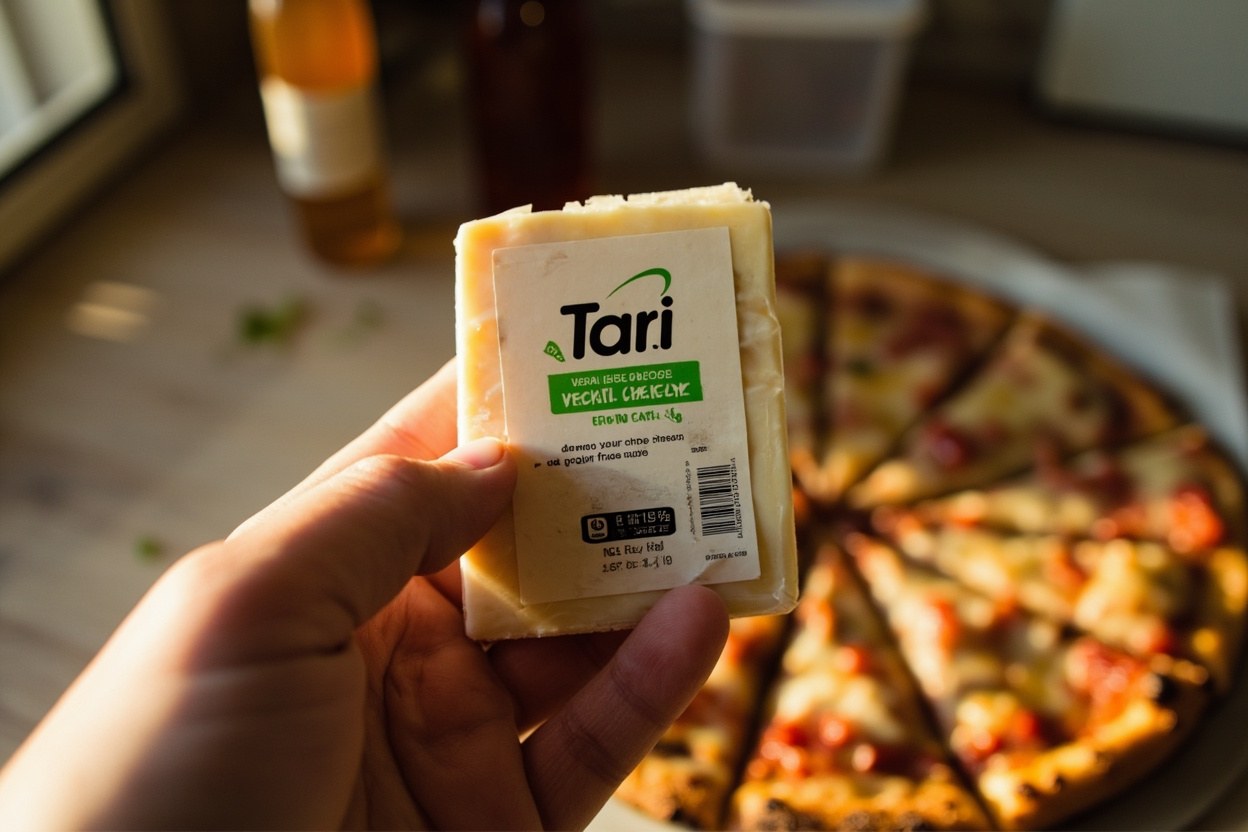
Pull a Tarā Mozzarella-style Block tub off the shelf and the ingredients panel in October 2026 reads, in this order: water, coconut oil (22%), modified maize starch, potato starch, salt, tricalcium phosphate, flavourings, calcium chloride, yeast extract, spirit vinegar, lactic acid (non-dairy), olive extract, cultures. The Cheddar-style block adds beta-carotene and a natural smoke flavour to the same base.
Working through this list from a halal perspective:
- Water and coconut oil are clean. Coconut oil is the fat that gives the block its stretch.
- Modified maize starch and potato starch are plant-derived thickeners. Neither requires halal certification to be permissible.
- Salt, tricalcium phosphate, calcium chloride are mineral or salt ingredients. Fine.
- Flavourings is the line Muslim shoppers should look at. UK law only requires the source be flagged if it is one of fourteen allergens. Tarā’s 2026 supplier statement says the flavourings are plant-based and do not contain animal derivatives, ethanol carriers, or pork.
- Yeast extract in this product is autolysed yeast, not brewer’s yeast grown on beer. It is halal-suitable.
- Spirit vinegar sounds like a flag, but in 2026 UK food law spirit vinegar is produced from fermented grain and the ethanol is boiled off. It is the same vinegar used in most British crisps and sauces. There is no residual alcohol in the finished block.
- Lactic acid (non-dairy) is the same acid found in sourdough and yoghurt, but produced by fermentation of sugar rather than milk. The label is careful to print the non-dairy qualifier.
- Olive extract is a plant antioxidant.
- Cultures are the fermentation starter. Tarā has confirmed in a 2026 customer service reply that these are grown on a plant-based medium, not dairy peptone.
The Cheddar-style block and the Creamy Spread use essentially the same base. The Parmesan-style Grate adds a yeast extract top note that mimics aged cheese, and the label adds a contains: wheat line because the yeast is grown on a wheat substrate. If you have coeliac disease, that is the one to skip, but it does not affect halal status.
The E numbers and what they do in this product
Tarā does not lean on a long list of additives, which is one of the reasons it has won over label-reading shoppers. The three E numbers you might spot on the 2026 tub are:
- E341 tricalcium phosphate - a mineral salt that helps the block hold its shape when melted. Halal-suitable, plant-sourced in Tarā’s recipe.
- E509 calcium chloride - used in cheese-making to help proteins set. Plant-sourced here.
- E270 lactic acid - produced by fermentation. The (non-dairy) qualifier on Tarā’s panel matters because the same E number in dairy cheese is, by definition, milk-derived.
None of these E numbers raise a halal flag on their own. The ones Muslim shoppers are often told to look out for in 2026, like E471 mono- and diglycerides (which can be animal or plant) and E160a beta-carotene (sometimes extracted from algae but often from palm), are either absent or, where present, clearly plant-sourced on Tarā’s label.
Cross-contact, shared lines, and the dairy factory question
The line on the back of a 2026 Tarā tub that Muslims tend to fixate on is the one that reads: “Made in a factory that also handles milk.” This is precautionary allergen labelling, not an ingredient declaration. It is there because milk is a UK-named allergen, and even trace amounts can affect someone with a severe milk allergy.
From a halal perspective, the question is whether that shared line matters. The mainstream Sunni view used by HMC, QIBHT, and the Halal Food Authority treats cross-contact with milk as irrelevant to halal status. Milk is halal. What Muslims cannot eat is pork, blood, animals not slaughtered correctly, and ethanol above the threshold that causes intoxication. A factory line that runs a vegan recipe in the morning and a dairy recipe in the afternoon is, in the standard 2026 guidance, acceptable.
If you follow a stricter school that requires a halal-certified product from a clean line, Tarā will not satisfy that requirement. The same applies if you are a Hanafi shopper who requires the certificate to come from a body you trust. There is no UKAS-accredited halal mark on the 2026 tub. The founder has, in a 2026 interview with the Grocer, said the company is in active discussions with two certification bodies, but nothing has been announced by October 2026.
Is Tarā halal on pizza and in cooking
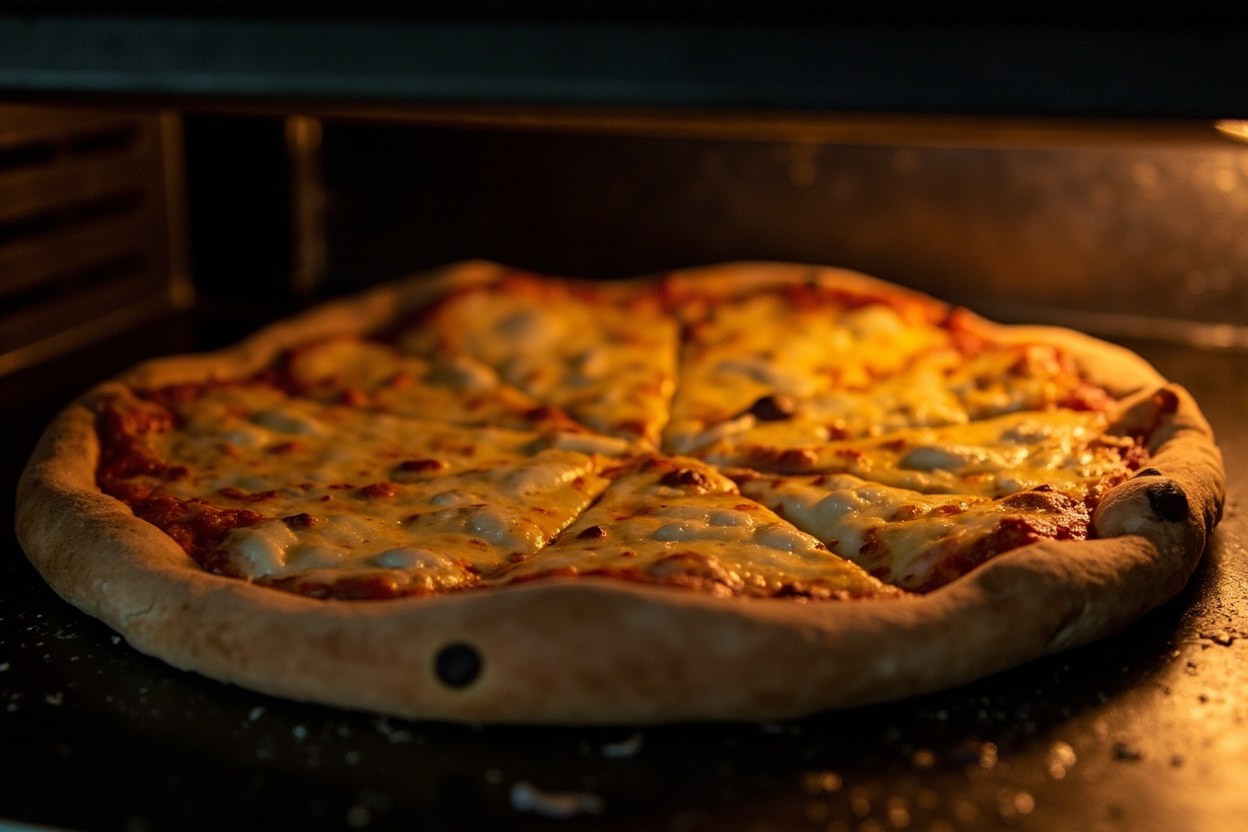
The most common use case for Tarā in UK Muslim households in 2026 is pizza. The Mozzarella-style block shreds with a box grater and melts at around 180°C, which is the temperature of a home oven on a pizza stone. The stretch is genuinely better than most supermarket vegan cheeses, and there is no burnt-plastic taste.
For cooking purposes, the halal question is the same as it is cold. The block goes from fridge to oven, the cultures are not alive after baking, and there is no ethanol in the recipe to be concerned about. The Parmesan-style Grate works as a top sprinkle for pasta and risotto, and the Creamy Spread is a soft alternative to cream cheese on bagels.
If you are running a small catering business or a mosque kitchen, the lack of certification is more of an issue. HMC’s 2026 guidance for caterers treats un-certified vegan cheese as a permitted ingredient rather than a halal ingredient, which means you can use it but you cannot label the finished dish as halal-certified. That is a different standard from a home kitchen.
How Tarā compares with other 2026 vegan cheeses
| Brand | Halal cert 2026 | Rennet-free | Ethanol in recipe | Shared dairy line | Price per 200g |
|---|---|---|---|---|---|
| Tarā Mozzarella block | None | Yes | No | Yes | £3.50 |
| Violife Original Block | None, EVS vegan society | Yes | No | Yes | £2.80 |
| Applewood Vegan | None | Yes | No | Yes | £3.20 |
| MozzaRisella (Italy) | Halal cert visible on pack | Yes | No | No dedicated line | £4.40 |
| Sheese Mature Cheddar | None, but many Muslim shoppers use | Yes | No | Yes | £3.00 |
Against this short list, Tarā’s 2026 position is straightforward. It is rennet-free, ethanol-free, and made from plant oils. The two missing pieces for a strict halal shopper are the certification mark and the dedicated line. Most UK Muslims who already use un-certified vegan cheese at home will treat Tarā the same way. Most Muslims who only buy halal-certified products will wait for the mark.
If you want to keep using our other guides alongside this one, the zakat on stocks and retirement accounts piece is useful for Muslims balancing investments with ethical food choices, and our halal certification in 2026 explainer walks through which marks to trust on a UK label.
Practical verdict for Muslim shoppers in late 2026
Tarā is halal-suitable for most Muslim households in the UK, on the basis of the 2026 ingredient list and supplier statements. The recipe is plant-based, free from rennet, free from ethanol, and free from the additives that usually cause concern. The shared dairy line and the lack of certification are the only sticking points, and they only matter if you observe the stricter standard.
If you are shopping for a family, the Mozzarella-style Block is the one to try first. It is the best melt on a pizza, and the recipe is the simplest of the four. The Cheddar-style works on toast, the Creamy Spread works on bagels, and the Parmesan-style Grate is a finishing sprinkle rather than a building block.
If you are shopping for a halal-certified kitchen, Tarā is not the right answer in October 2026. The founder has flagged certification in the pipeline, so this guide is worth re-reading in 2027.
Quick answers
- Does Tarā vegan cheese contain any pork or animal products?
- No. The 2026 recipe is plant-based, and the supplier statement confirms the flavourings, cultures, and additives are free from animal derivatives, including rennet and lipase.
- Is the ethanol in spirit vinegar a problem?
- No. The spirit vinegar in Tarā’s recipe is grain-fermented and the ethanol is boiled off during production, leaving no residual alcohol in the finished block.
- Can I serve Tarā at a mosque event?
- Most mosque kitchens require halal-certified ingredients, and Tarā is not certified in October 2026. Treat it as a permitted vegan ingredient rather than a halal-certified one, and check your mosque’s policy.
- Will Tarā be halal-certified soon?
- The company has said in 2026 interviews that it is in active discussion with two UKAS-accredited halal bodies, but no certification has been announced as of October 2026.
General information, not a fatwa. Where scholars differ, we try to say so. For your situation, ask a scholar you trust.