In the house
Halal pre-workout supplements
Updated 6 September 2026
A lot of people think checking a pre-workout for halal status means scanning the label for the word "alcohol" and calling it done. That much is straightforward, and it's rarely where the real question sits. A typical tub lists fifteen or more ingredients, and the ones worth slowing down for are usually the flavoring system, the capsule shell if it comes in capsule form, and a handful of amino acids whose sourcing isn't obvious from the name printed on the label.
Why a single verdict doesn't work here
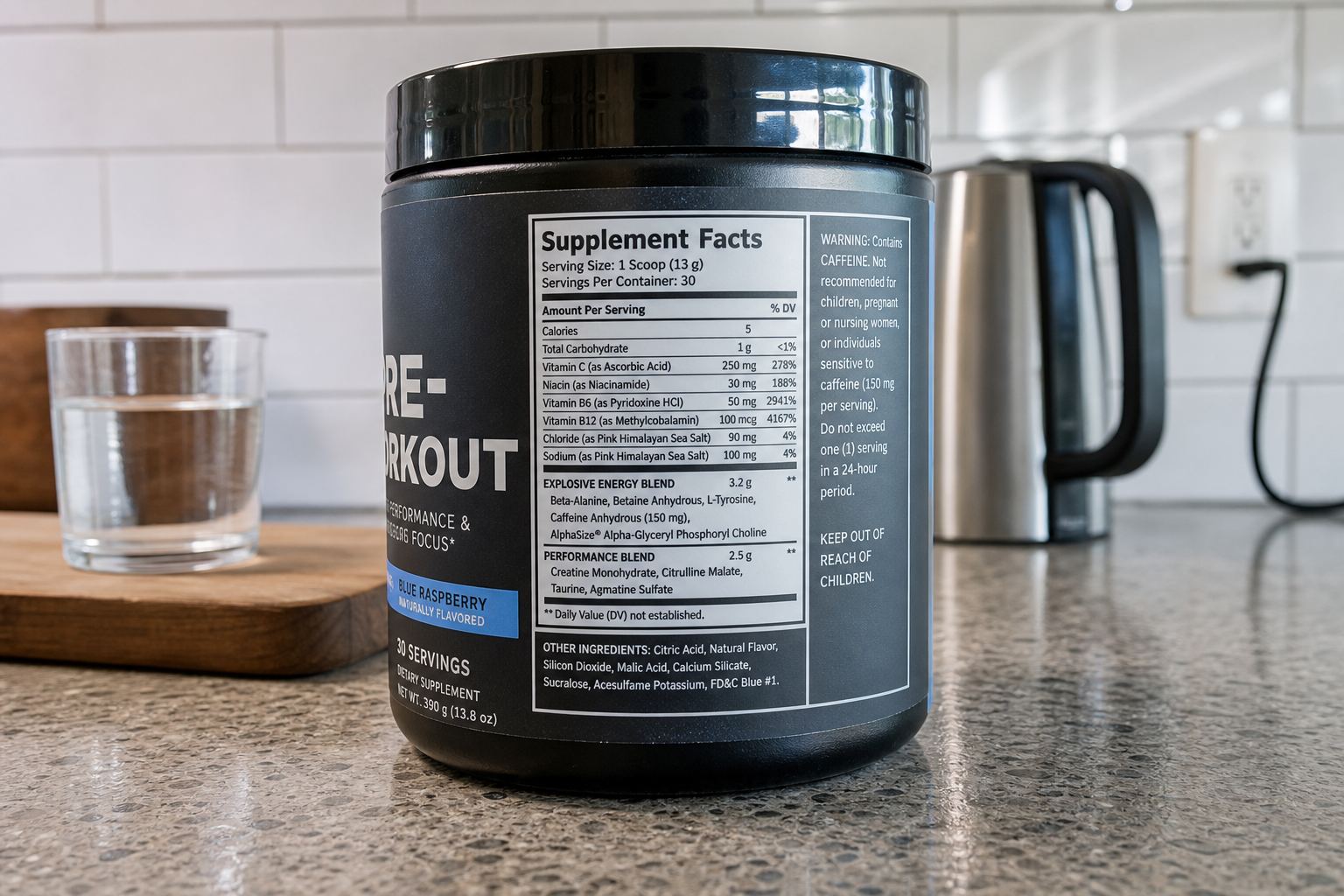
Pre-workout is a blend, not one substance. A stimulant base (usually caffeine), a pump ingredient (often citrulline), an endurance amino (beta-alanine), sometimes creatine, sometimes taurine, plus sweeteners, colors, and flavoring, all in one scoop. Each of those categories has its own sourcing question, and they don't all resolve the same way. Treating the whole product as one yes or no misses where the actual concerns live.
Flavoring and the alcohol question
Flavor systems, especially natural flavor blends and anything vanilla-adjacent, sometimes carry trace alcohol as a carrier or processing aid rather than as a drinkable ingredient. This is a genuine area where scholars differ. Some permit small, non-intoxicating residual amounts used purely as a processing aid, particularly where the alcohol evaporates off or is present in negligible quantity, a position some discuss under the concept of istihalah, or transformation of the substance. Others hold a stricter line that any alcohol at all, regardless of amount or purpose, makes the product impermissible. Neither view is fringe. If this matters to you, it's worth contacting the manufacturer directly to ask what carries the flavor, since labels rarely spell it out, and cross-checking specific flavoring agents against a sourced tool like the halal ingredient checker before you assume either way.
Capsules, if that's the format
Powder tubs skip this question entirely, but capsule or pill-form pre-workouts add one more thing to verify: the shell itself. Gelatin capsules can be bovine, porcine, or fish-derived, and only one of those is straightforwardly a problem. Porcine gelatin is not permissible. Bovine gelatin depends on how the animal was slaughtered, and views vary on how strictly that needs to be verified for a processed ingredient several steps removed from the animal. Fish-derived gelatin avoids the slaughter question altogether, since fish don't require zabiha slaughter in the majority view. Many supplement brands now use HPMC or vegetarian capsules specifically to sidestep this, and it's usually stated on the bottle or the product page if you look.
Taurine and the amino acids
Taurine sounds like it should be an animal product, since it was first isolated from ox bile centuries ago, and that history is exactly why it raises questions it doesn't really deserve anymore. The taurine used in modern supplements, including nearly all pre-workout formulas, is synthesized in a lab rather than extracted from animal tissue. The same is generally true of beta-alanine, citrulline, and creatine in commercial products. That doesn't mean sourcing is never worth asking about. It means the default assumption should lean toward synthetic, and a quick email to the manufacturer's customer service line will usually confirm it in a sentence. If a product does contain creatine specifically, the sourcing question there is settled separately; see is creatine halal for why creatine itself is generally not the issue, and capsule material and flavoring are.
A practical checklist
Rather than one verdict, run through this before you buy:
| What to check | Why it matters |
|---|---|
| Flavoring source (natural flavors, vanilla) | May carry trace alcohol as a carrier; scholars differ on whether trace, non-intoxicating amounts are permissible |
| Capsule shell, if applicable | Gelatin can be bovine, porcine, or fish-derived; porcine is not permissible, bovine depends on slaughter, fish avoids the question |
| Taurine sourcing | Almost always lab-synthesized today, but confirming with the manufacturer removes the doubt |
| Sweeteners and colors | Watch for carmine (E120) or other insect-derived colorants; most schools hold insects other than locusts aren't permissible to eat, though a minority view is more permissive |
| Third-party certification | A mark from IFANCA, HMC, JAKIM, or MUI covers the whole formula and removes most of the guesswork above |
That last row is the shortcut most people actually want. If a product carries certification from a recognized body, the manufacturer has already done this line-by-line check for you. Without one, the ingredient list is where the work happens, and a sourced lookup tool like the ingredient checker can save you the guesswork on individual additives, colorants, and E-numbers rather than trying to research each one from scratch.
Where this leaves you
Most pre-workout concerns turn out to be about flavoring and capsule material rather than the core performance ingredients, which are usually synthetic and uncontroversial. The honest complication is the flavoring alcohol question specifically: it's a real, live disagreement among scholars, not a settled point with one right answer, and reasonable, knowledgeable people land in different places on it depending on how they weigh trace amounts and processing methods. If that distinction matters to you, it's worth deciding where you personally stand on it, or asking a scholar you trust, rather than assuming the question has already been closed one way or the other.
Quick answers
- Is creatine the issue?
- Usually not the creatine itself. See the creatine page. The blend is the issue.
- What about sweeteners?
- Aspartame, sucralose, and stevia are not animal products. Flavour carriers can still use alcohol.
- Should I trust “suitable for Muslims” on Amazon?
- Only if a named certifying body is attached. A seller sentence is not a mark.
General information, not a fatwa. Where scholars differ, we try to say so. For your situation, ask a scholar you trust.