In the Pantry
Is L-Theanine Halal? A 2026 Label Guide for Tea Drinkers
Updated 6 October 2026
A quiet amino acid from tea has migrated into matcha lattes, sleep gummies and stress supplements, and Muslims now have to read a new corner of the supplement label.
What L-theanine actually is, and where it sits on a label
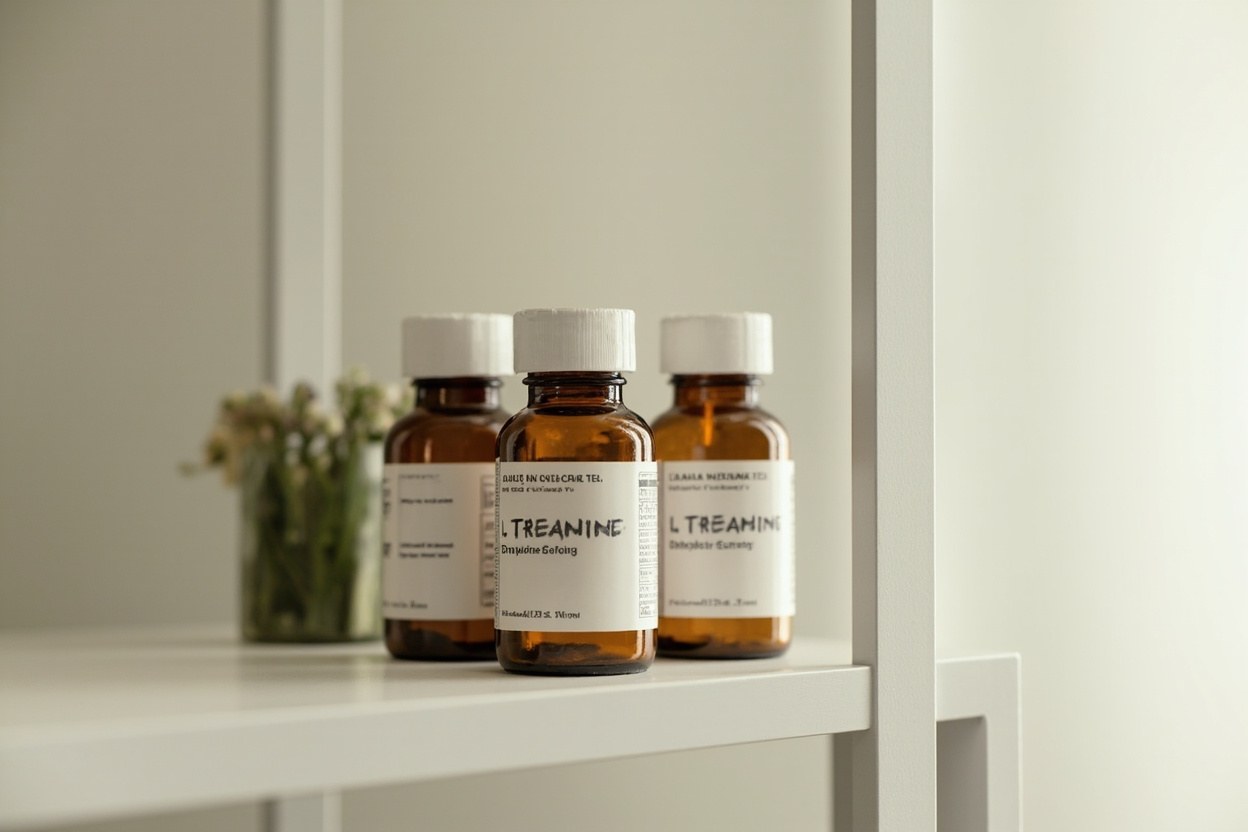
L-theanine is a water soluble amino acid that occurs naturally in the tea plant, Camellia sinensis, and in a small wild mushroom sometimes called bay bolete. It is the molecule that balances the caffeine in a cup of tea, so the cup feels alert without being jittery. On a 2026 supplement label you will see it written as L-theanine, sometimes Suntheanine when it is the branded synthetic form, occasionally theanine on its own, and in some UK brands as a component of a broader green tea extract at 200 to 400 milligrammes per serving.
Three things matter for a Muslim shopper. First, the source route, which is almost always a fermenter using sugars and water rather than a slaughter derived raw material. Second, the delivery vehicle, which can be a pullulan capsule, a gelatin capsule, a pressed tablet with magnesium stearate, or a powder in a stick pack. Third, the surrounding blend, because L-theanine is rarely sold on its own any more, and the gummy, chocolate or drink mix around it brings its own questions.
For most people the practical answer in 2026 is that pure L-theanine powder from a recognisable supplement maker is fine to take, and the label work is about everything that is sitting next to it in the ingredient line.
If you want a single rule of thumb for the kitchen table, it is this: when the only animal derived ingredient that could possibly be in the product is the capsule shell, and the capsule is described as plant cellulose or pullulan, you can put the packet back in the cupboard without further investigation. When the capsule is described as gelatin, or the source is not declared at all, you have one more question to ask.
How L-theanine is made: fermentation, not slaughter
The bulk L-theanine that ends up in supplements and instant drinks in 2026 is produced by microbial fermentation. A common production strain is Brevibacterium or a genetically tuned Escherichia coli that has been given the enzymes to convert sugars and an amine donor into L-theanine. The output is crystallised, washed and dried into a fine white powder that is essentially identical to the molecule you would extract from a tea leaf.
This matters because none of the input materials are animal derived, and the production route does not pass through a slaughter step. The closest the process gets to anything that would worry a Muslim shopper is the fermentation broth, and reputable manufacturers publish the carbon source as glucose, sucrose or a plant derived hydrolysate.
Suntheanine, the patented form sold by Taiyo Kagaku, takes the same fermentation route and was the first form to be widely tested for purity. By 2026 several other producers in China, India and Germany have brought their own fermentation plants on stream, and the price of pure L-theanine has fallen enough that it appears in everyday functional drinks rather than only in the premium supplement aisle.
There is a smaller, older production route in which L-theanine is extracted from tea leaf waste, but it is now a niche product and it tends to appear in teas and skincare rather than in the encapsulated supplements a kitchen-table shopper is most likely to hold in their hand.
Reading a 2026 label: the five lines to scan
Pick up the bottle or the sachet and look for these five lines before anything else.
The capsule or delivery line will read pullulan, hydroxypropyl methylcellulose, or gelatin. Pullulan and HPMC are plant based and pose no problem. Gelatin without a source declared used to be the single most common reason an L-theanine product failed a quick check, although several 2026 reformulations have moved the major brands to pullulan to dodge the question entirely.
The anti-caking or flow agent line will often read magnesium stearate, silicon dioxide, or rice concentrate. Magnesium stearate is the one to watch, because the magnesium can be paired with stearic acid from either palm oil or animal fat. The 2026 mainstream brands in the UK have moved overwhelmingly to vegetable magnesium stearate, and the more transparent ones write vegetable source on the line, but cheaper own label products still leave it ambiguous.
The bulking or filler line will read microcrystalline cellulose, maltodextrin, or dicalcium phosphate. All three are fine. The only catch is that some maltodextrin is produced on shared lines with dairy or with porcine derived enzymes, so if you have a strict reaction to either, the manufacturer should be asked.
The flavour and colour lines matter more in gummies and drink sticks than in capsules, and they will often hide a carmine or a shellac that the shopper was not expecting. The rule is to read the colour line as carefully as the active ingredient line.
The allergen and may contain line is your last check, because a product that is genuinely free of animal inputs can still share a line with milk, soy, or fish, and that matters for families managing both halal and a separate allergy.
The brands you will see on the shelf in October 2026
Holland and Barrett have their own label L-theanine in pullulan capsules with vegetable magnesium stearate, and it is one of the cleaner entries on the high street. Boots own label range followed the same template in early 2026 and the capsules are also pullulan.
Myprotein and PhD Nutrition, both popular with younger shoppers, sell L-theanine in HPMC capsules with the source spelled out. Their gummy formats contain bovine gelatin, which is the one to watch, and their label declares it.
Higher end supplement makers such as Bioglan, Solgar and NOW Foods use pullulan or HPMC, and NOW Foods in particular has had a halal friendly line for several years. The Suntheanine branded SKUs across all of these are a safe default if you do not want to do the reading yourself, because Taiyo Kagaku has consistently used plant based capsule materials and vegetable magnesium stearate.
The harder area is the supermarket drink aisle. A 2026 matcha and L-theanine cold brew launched in March contains L-theanine declared as a separate ingredient, pullulan in the bottle seal, and carmine in the colour. The drink itself is fine to drink, the colour is the worry, and a Muslim shopper who is cautious about carmine will skip the bottle and pick the plain green tin next to it.
Matcha, kombucha and tea bags: when you do not need a label at all
There is a quieter category of L-theanine products that you do not need a halal label to buy, and it is the one most people will reach for first.
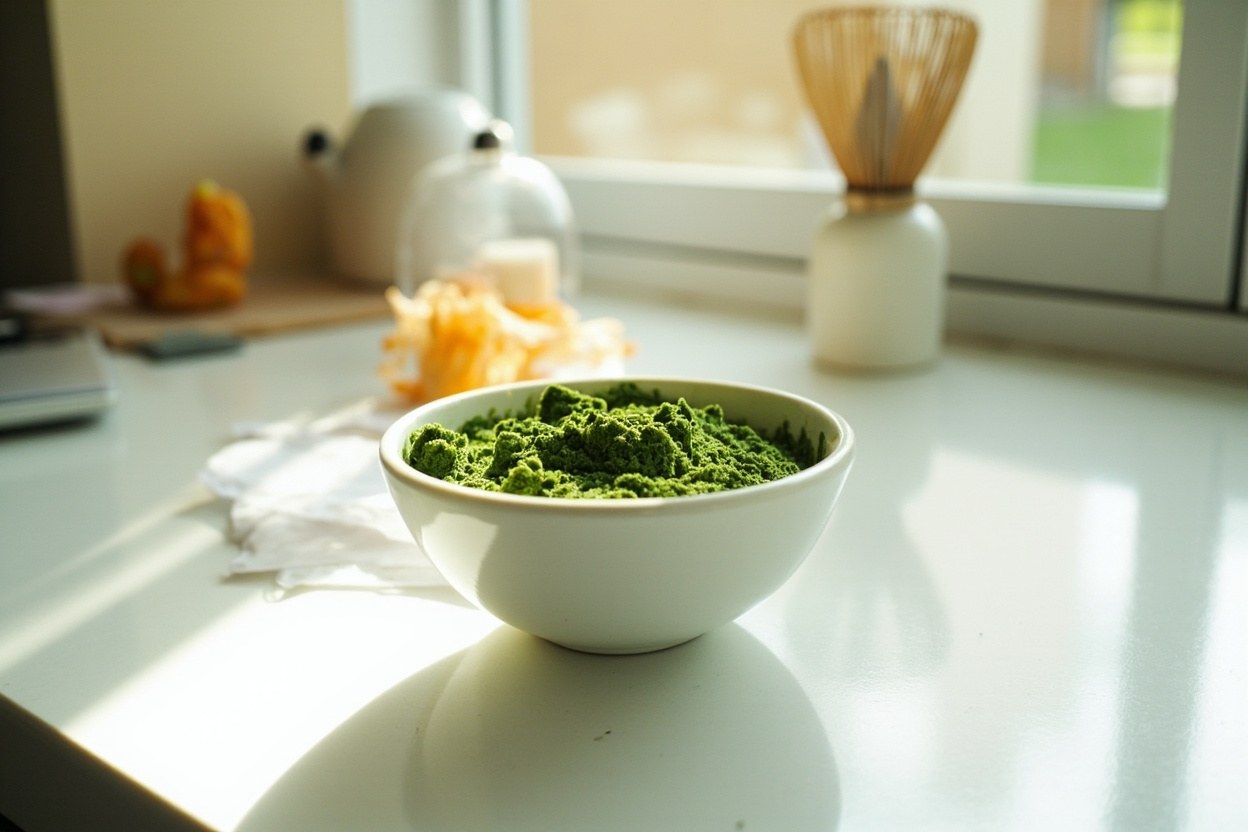
A good quality matcha, a gyokuro, or a shade grown sencha will carry its own natural L-theanine content without any added ingredient, and the only label question is whether the tea has been flavoured with anything animal derived, which in practice means a milk powder, a honey powder, or a flavour system that contains shellac. Pure leaf tea does not need a halal investigation.
Kombucha, particularly the hard kombucha segment that boomed in 2025 and 2026, often contains natural L-theanine from the tea base plus added B vitamins, and the only label question is the same one you would ask for any kombucha, which is whether the scoby was propagated on a vegan sugar or a honey starter. Commercial kombucha almost always uses cane sugar, so this is a non issue in practice.
If you would rather drink your L-theanine than swallow it, a quality loose leaf green tea, brewed for two to three minutes in water that is just off boiling, will give you a meaningful dose without any reading at all, and that is often the path the kitchen-table shopper finds easiest.
The supplements, gummies and drink sticks: a quick comparison
Here is a 2026 snapshot of how the common formats line up. The table is a guide, not a fatwa, and the manufacturer batch you hold in your hand should still be checked.
Pure L-theanine capsule from a named UK supplement maker: usually pullulan shell, vegetable magnesium stearate, no colour, no flavour. This is the format most halal certifying bodies have signed off.
L-theanine gummy: almost always bovine gelatin in the gummy matrix, frequently carmine in the colour, often a natural berry flavour that can be from any source. This is the format that most often fails a quick kitchen-table check.
L-theanine drink stick or sachet: a powder blend with theanine, often B vitamins, a sweetener, and a flavour. Pullulan or HPMC in the stick, the colour line is the worry, and some 2026 SKUs hide a milk derivative in the flavour system.
Functional drink with added L-theanine: the bottle itself is fine, the colour and the stabiliser are the lines to read, and several 2026 launches have been surprisingly clean.
Matcha or loose leaf green tea: no added L-theanine, no animal derived inputs, nothing to read. For most households this is the cleanest entry point.
Tool links and what to do next
If you want to do the reading faster next time, the halal certification symbols guide for 2026 explains which marks actually help you choose on a UK shelf, and the carrageenan E407 label guide covers another additive that shows up in the same functional drink category. The beeswax E901 guide is useful when the product is a gummy, because shellac and beeswax often appear together. The zakat calculator is the other tool most readers want open in a second tab, particularly if the L-theanine is part of a broader wellness budget.
For most households the practical rule is straightforward. Buy a pure L-theanine capsule from a named maker, read the capsule and the magnesium stearate line, and you are done. If you want the calming effect of L-theanine in your cup, brew a quality green tea and skip the label reading altogether. Either path gives you the benefit of the amino acid without dragging a halal question into the kitchen.
Quick answers
- Is synthetic L-theanine made by fermentation halal?
- Yes, the fermentation route uses sugars and water, not animal inputs, and the molecule that comes out is identical to the one in a tea leaf. Most mainstream 2026 SKUs are made this way.
- Why do some L-theanine gummies fail a quick check?
- The gummy matrix is almost always bovine gelatin and the colour is often carmine, and both are animal derived. The capsule or powder format avoids both problems.
- Does matcha contain L-theanine?
- Yes, shade grown matcha and gyokuro are the richest natural sources, and you do not need a halal label to drink them. The only question is whether the blend contains a milk or honey powder.
General information, not a fatwa. Where scholars differ, we try to say so. For your situation, ask a scholar you trust.