Pantry
Is whole wheat bread halal? A 2026 bakery label guide
Updated 6 October 2026
Whole wheat bread is almost always halal by its core ingredients, yet the back of the pack is where the real question lives.
What actually goes into a 2026 whole wheat loaf
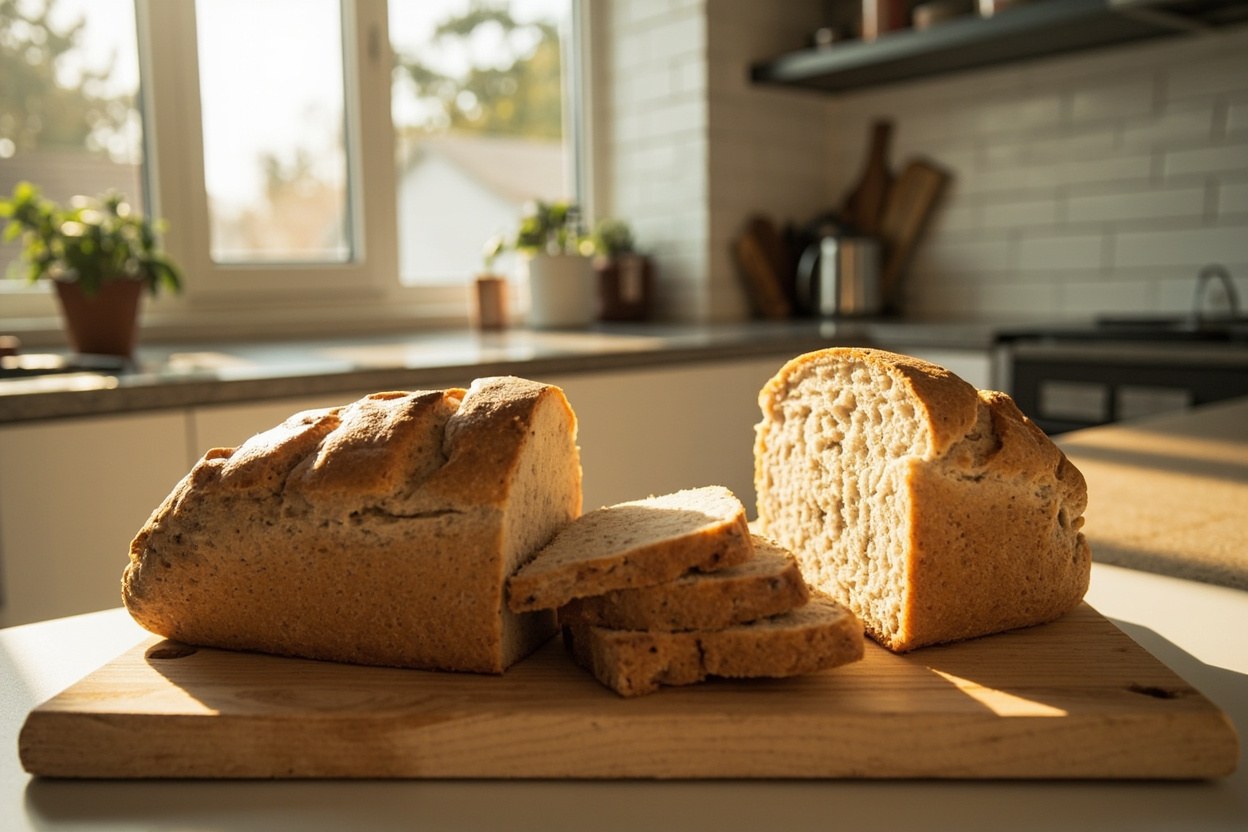
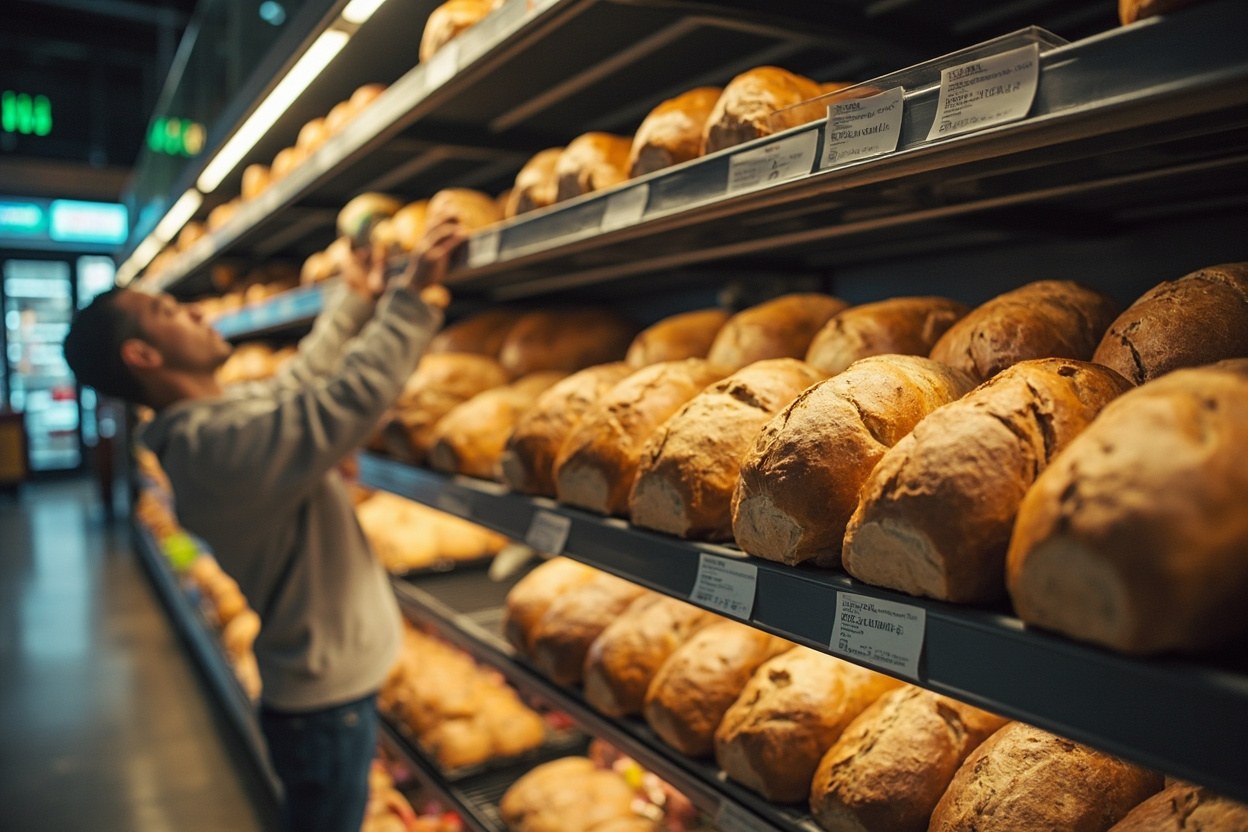
Walk into any supermarket in October 2026 and the wholemeal aisle will look reassuringly simple. A brown loaf, a few seeds on top, the word "whole wheat" or "wholemeal" on the front, and a list of ingredients that, at first glance, reads like a home recipe. The trouble is that an industrial loaf is rarely just flour, water, yeast and salt. A modern whole wheat loaf is built for a three to five day shelf life, a soft crumb, and even slicing, and that brief pushes bakeries toward a long list of processing aids that do not show up in a country kitchen.
The base of any whole wheat loaf is straightforward. Whole wheat flour, sometimes blended with refined wheat flour to lift the crumb, water, salt, yeast or a sourdough culture, and a small amount of oil or fat. Wholemeal itself is just the whole wheat berry, bran, germ and endosperm milled together, so there is nothing in the grain that raises a halal question. The fat, when it is vegetable oil or rapeseed oil, is also fine on its own.
What changes the picture is everything else. A 2024 to 2026 reformulation push across UK and US bakeries, partly driven by the cost of ingredients and partly by sodium and additive targets, has led to more loaves using dough strengtheners, enzymes and emulsifiers that did not feature on a label ten years ago. Several of those ingredients are plant derived and present no concern, but a small number can be sourced from animals, and a couple can be sourced from animals that were not slaughtered in a halal way. That is why a careful read of the back of the pack matters, even for a product as plain as sliced brown bread.
The ingredients that can change a halal verdict
Six ingredient groups are worth slowing down on when you turn the pack over. None of them will say "haram" on the label, and that is the point of this guide.
L-cysteine, E920. A dough conditioner that relaxes gluten and gives a softer crumb. It is produced by fermentation, and the fermentation can be run on a range of feedstocks. The most common source today is plant based, but historically the cheapest feedstocks were human hair and duck feathers, and both are still in use at some plants. Hair sourced material is the one that worries shoppers most, and it is the reason several Malaysian and Indonesian certifiers require a written declaration. On a 2026 UK or US loaf you will usually see it simply as L-cysteine or E920, with no origin. A halal certified loaf will either omit it or show a halal mark that covers processing aids.
Mono and diglycerides, E471. Emulsifiers that keep bread soft and slow staling. They are fats split and recombined with glycerol, and the fat can be soy, palm, sunflower or, in cheaper loaves, animal fat. When the source is animal, the question is whether the fat came from a halal slaughtered animal, from pork, or from a non halal slaughtered cow. Without a halal mark you cannot tell from the label, because EU and US rules do not require origin disclosure for E471 in bread. Plant only versions do exist, and several 2025 to 2026 plant based mono and diglyceride lines are now on the market, but they are not universal.
Ethanol. Bread dough rises through yeast fermentation, which produces a small amount of ethanol that bakes off in the oven. That residual ethanol is so low, often under 0.5 percent of the dough weight, that every mainstream scholar treats baked bread as a non intoxicating carrier and therefore permissible. The real ethanol question in 2026 sits with ethanol used as a carrier for flavours, colours or dough improvers. A loaf with "natural flavouring" may have that flavour pre dissolved in ethanol, and that ethanol does not bake off. Look for phrases like "ethanol carrier" or, on a US label, "alcohol" inside the flavour declaration.
Enzymes. Modern bread relies on enzymes to do what kneading used to do. Amylase breaks starch into sugar so the yeast has more to feed on, xylanase softens the crumb, lipase strengthens the gluten network. Microbial enzymes, grown in controlled fermentation, are the most common and are uncontroversial. Animal derived enzymes, particularly lipase from calf stomach and rennet from calf stomach, are also used in specialty loaves. A halal certified loaf should declare the source. A non certified loaf usually just says "enzymes" or lists an E number such as E1100, and you cannot tell from the front.
Emulsifiers and stabilisers, E481, E482, E472e and so on. Sodium stearoyl lactylate, E481, and calcium stearoyl lactylate, E482, are sodium and calcium salts of lactylated fatty acids, used as dough strengtheners. They are usually plant based, but the fatty acid can be animal. E472e is a similar story. Most plant only production exists, and a halal mark again removes the guesswork.
Flour treatment agents and bleachers. Chlorine gas, benzoyl peroxide, azodicarbonamide and potassium bromate have all been used to whiten or strengthen bread dough. Azodicarbonamide is banned in the EU and Australia, potassium bromate is restricted, and chlorine treatment is permitted only for cake flour in the UK. None of these is haram in itself, but they are worth flagging if you also care about clean label baking, which many Muslim shoppers do.
None of the above is a reason to give up sliced bread. It is a reason to read the list, and to know which marks actually mean what they say. For a deeper read on one related additive, see our guide on ethanol in bread and on cocoa butter in sweet baked goods.
Halal marks in 2026: which ones cover the loaf
A halal mark is a faster read than an ingredient list, but only if the mark covers the actual product and not just the factory. There is a real difference between a slaughter certificate for meat, a halal certificate for a processing plant, and a halal mark printed on the finished pack. Whole wheat bread sits in the third group, because the risk is in processing aids, not in the grain.
On a UK or US wholemeal loaf in October 2026 you are most likely to see one of the following. A small green crescent with the word Halal in English, which is the generic halal mark and tells you little about who audited it. The Halal Monitoring Committee, HMC, mark, which is widely recognised in the UK and covers the product on the pack. The Halal Food Authority, HFA, mark, also UK based, with its own list of approved bakeries. In the United States, the most common marks are IFANCA, ISWA, and the new Islamic Services of America mark used by several national bakeries. In South Africa, MJC and SANHA. In Malaysia and Indonesia, JAKIM and BPJPH, both of which require full disclosure of L-cysteine and enzyme sources.
The point that catches shoppers out is the difference between a mark for meat and a mark for bakery. A HMC or JAKIM mark on a loaf of bread tells you the certifier has reviewed the ingredient list and the processing aids. A halal mark that was originally issued for a meat product on the same production line is not the same as a mark for the bread itself. When in doubt, check the certifier website for the most current product list, which is updated more often than the bakery's own marketing.
You can compare how marks line up across categories in our guide to halal certification in 2026.
Sourdough, sprouted and gluten free: a quick side check
Sourdough whole wheat. Often the cleanest option on the shelf. Long fermentation, flour, water, salt, and a starter that is flour and water. A few loaves add a small amount of commercial yeast to speed the proof, which is not a problem, and a few add enzymes, which is. Read the list even on sourdough.
Sprouted whole wheat. Sprouting changes the nutrition of the loaf, not the halal status. The same six ingredient groups above still apply, and sprouted loaves often contain added gluten, which is fine in itself, and added enzymes, which need the same check.
Gluten free whole grain. This is where the ingredient list gets long. Xanthan gum, E415, is microbial. Psyllium husk is plant. The egg replacer in some vegan loaves is plant based, in others it is egg. Whole grain gluten free loaves are halal by default, but again, check for mono and diglycerides and for L-cysteine, both of which appear in this category.
Flatbreads and chapati. Store bought chapati and whole wheat wraps often have a shorter ingredient list than sliced bread, but they can also include glycerol, E422, and mono and diglycerides for pliability. The same rules apply.
How to read a 2026 whole wheat label in 60 seconds
Step one, turn the pack over and find the ingredients panel. Step two, scan for the six groups above, L-cysteine, E920, mono and diglycerides, E471, ethanol, enzymes, E481 or E482, and any bleach or treatment agent. Step three, look for a halal mark that names a recognised certifier. Step four, if there is a mark, check the certifier website for the most current approval. Step five, if the list is long and there is no mark, and you cannot confirm the source, choose a different loaf or switch to a bakery you trust. There are now several national supermarket own label wholemeal loaves in the UK and US with full halal certification, so a quick swap is realistic.
If you want to do the maths on what to spend on a weekly shop that fits a Muslim household budget, our zakat calculator sits one click away, and our guide to packing a school lunch without guessing covers the bread choice for a child's lunchbox in more detail.
What scholars and certifiers say, briefly
Across the four main Sunni schools, and in the Jafari school, the position on bread is the same. Grains, water, yeast, salt and plant oil are halal by default. Processing aids that are not intoxicating, are not derived from pork, and are not derived from a non halal slaughtered animal are permissible. Where processing aids are ambiguous, the default for most scholars is permissibility unless a haram source is known, on the basis that the default of things is permissibility. The stricter minority view, which is more common in parts of Southeast Asia than in the Gulf, is to require a halal mark whenever an animal derived ingredient is plausible. Both views agree that a plain whole wheat loaf with no animal derived processing aids is halal, and that a loaf with pork sourced mono and diglycerides is not.
The practical upshot is that the answer turns on disclosure. A loaf that discloses its processing aids and shows a recognised halal mark is straightforward. A loaf that hides behind "enzymes" and "emulsifiers" without a mark is not haram by definition, but it asks you to take the producer at their word, and that is a choice each household has to make.
Quick answers
- Is the small amount of ethanol in yeast raised bread halal?
- Yes, mainstream scholars treat baked bread as a non intoxicating carrier, because the ethanol produced by yeast bakes off in the oven. The more important question on a 2026 label is ethanol used as a carrier for flavours or colours, which does not bake off.
- Does L-cysteine from human hair really appear in bread?
- It can. L-cysteine, E920, is produced by fermentation on a range of feedstocks, and hair is one of the cheaper ones. A halal certified loaf will either omit it or show a mark that covers processing aids.
- Is whole wheat bread halal without a halal mark?
- Usually, yes, when the ingredient list is short and there is no animal derived additive. When the list includes E471, E920, enzymes, E481 or E482 without a source, the safer path is a loaf with a recognised halal mark.
- Is supermarket own brand wholemeal usually halal?
- In the UK and US in 2026, several major supermarket own label wholemeal loaves carry HMC, HFA or IFANCA marks, while others do not. Always check the current pack, because recipes change year to year.
General information, not a fatwa. Where scholars differ, we try to say so. For your situation, ask a scholar you trust.