Pantry
Is E904 shellac halal, and where does it hide on a label
Updated 29 September 2026
The distinction is between a substance scraped from the body of an insect and a substance secreted by an insect, because the two are not treated the same way in every school of thought. Shellac is the second: a resin secreted by the female lac insect, scraped off tree branches in India and Thailand and refined into the glossy coating that gives jelly beans their surface. The question is whether that difference is enough, and the answer depends on which scholar you ask.
Shellac: what it is, and where it comes from
Shellac is a natural resin. It is secreted by the female lac insect (Kerria lacca, formerly Laccifer lacca), a small scale insect that lives on host trees across South and Southeast Asia. The insect produces the resin as a protective casing around its eggs, and harvest is the straightforward business of scraping that casing off the branches. The raw material is washed, filtered and refined into dewaxed shellac flakes, which can be dissolved in alcohol to make the liquid glazing agent that ends up on sweets, fruit and tablets.
Its job in a kitchen context is functional as much as cosmetic: a hard, glossy, moisture-resistant coat that stops jelly beans from fusing into a single brick, stops a chocolate shell from melting onto your fingers, and protects pharmaceutical tablets from stomach acid long enough for them to do their job in the intestine. None of those uses is decorative. They require a film-forming resin that is food-safe, and shellac happens to be one.
The carmine distinction: body versus what comes off it
Carmine (E120) and shellac (E904) are both insect-derived additives, and they often get bundled together in halal discussions, but they are not the same thing. Carmine is extracted from the dried and crushed bodies of cochineal insects. Shellac is a secretion produced by the lac insect, refined. The substance is what the insect made, not what the insect is.
The distinction matters because Islamic jurisprudence treats secretions and body matter differently in several schools. Honey is the reference case. The Quran names honey as permissible, and bees are insects, so the standard analogy is that what an insect produces can be lawful even when the insect itself is not lawful to eat. Some scholars extend that analogy to shellac. The counter is that lac insects are unavoidably present in the harvested resin and are removed only during refining, which makes the distinction less clean in practice.
Where scholars actually land on it
The scholarly positions divide into three practical camps, and which camp you follow is a personal decision, but it is worth seeing the spread before you decide.
The two rulings, side by side
| Position | Reasoning | Who holds it |
|---|---|---|
| Permissible | Shellac is a secretion, not the insect body. The Quran permits honey, also an insect product, so the analogy extends. | Some Middle Eastern halal standards; scholars who reason by analogy to honey. |
| Not permitted | Lac insects are killed in harvest and unavoidably present in the raw resin; only refining removes them. The source is an impermissible creature. | Malaysia's JAKIM; most UK-based halal certification bodies, including HFA and HMC. |
| Conservative avoidance | The difference between the two positions is not resolvable by the shopper, and the practical cost of avoiding shellac is small. | Most UK Muslim consumers, by default. |
Where E904 actually shows up in a normal shop
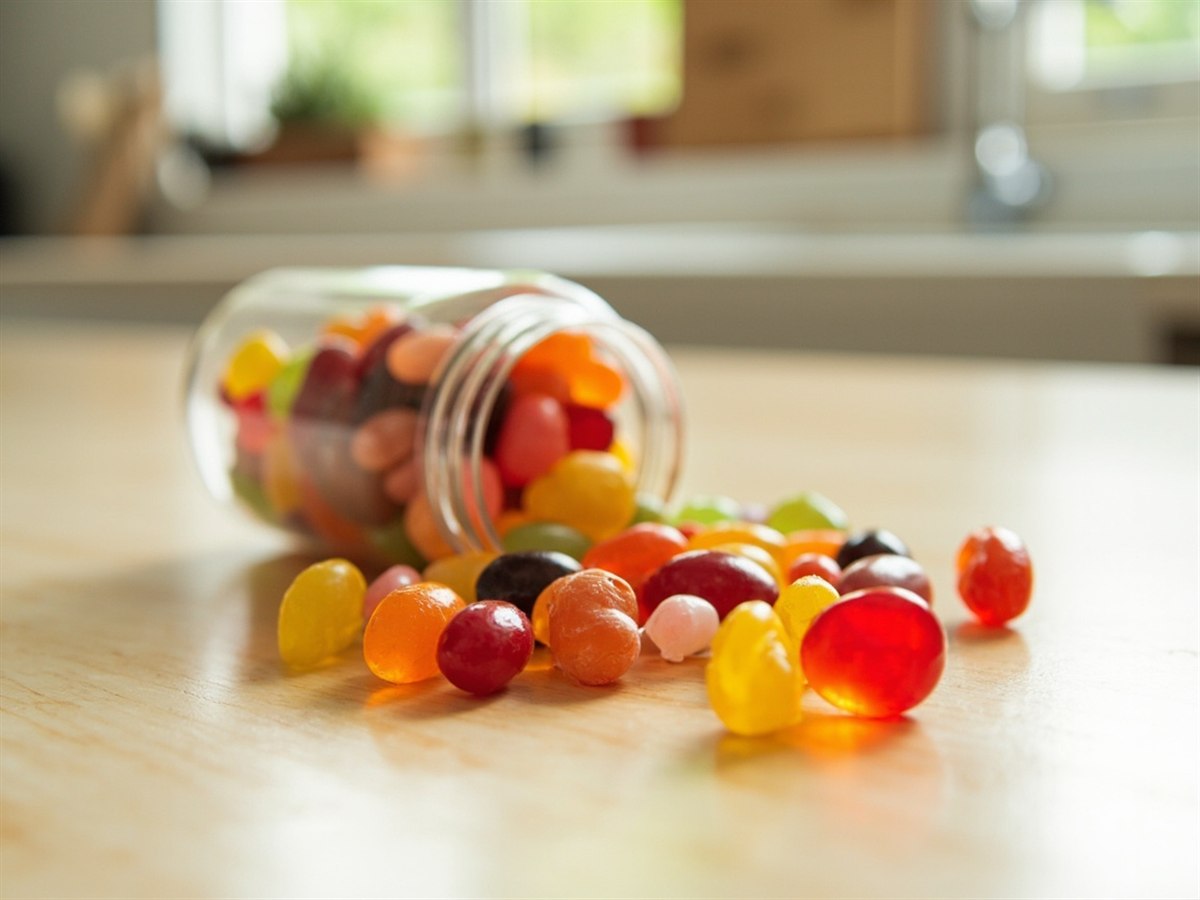
Shellac is more common than people realise, and the surprise is part of why it is worth knowing about. The standard Jelly Belly range carries confectioners glaze, which is shellac. Some chocolate-coated raisins and chocolate-coated nuts use it for the same shine-and-anti-stick reason. Some pharmaceutical tablets use it as an enteric coating that survives stomach acid. Some fresh fruit, particularly apples, citrus and pears, is coated with it after harvest to replace the natural wax that washing strips off, and loose fruit carries no ingredient list at all.
Chewing gum coatings and some coffee bean glazes use it too. None of these are exotic or imported-only. They are in the corner shop.
The names it hides behind on a label
This is the part that beats carmine for evasiveness. E904 is the EU food additive code, and most UK labels will use that. A barcode scan is often quicker than reading the back.
The list includes: E904, shellac, lac resin, confectioners glaze, confectioners resin, resinous glaze, candy glaze, pure food glaze, natural glaze, and pharmaceutical glaze on medication labels. Natural glaze is the one to pause on, because it appears on products aimed at people trying to avoid synthetic additives, and it means lac-bug resin. Nothing about the phrase is dishonest; it relies on you to fill in a different meaning.
The kitchen-table test: is this jar going to fail you
The default position for a UK household following the HFA or HMC is that shellac is not acceptable. If that is your position, read the label once, look for any of the words above, and not buy products that list them. The ingredient scan in a halal-checker app reads the printed text directly off the packet.
If the question is whether you can rely on a halal symbol on the front of the pack instead, the answer is usually yes, with the caveat that the certifier standard matters. A Malaysian or JAKIM-certified product is held to a stricter position on shellac. A UK supermarket own-label halal line tends to follow the HFA or HMC line, which excludes shellac.
Related kitchen questions, in one paragraph
Shellac sits in a wider family of insect-derived or insect-adjacent food questions, and a few of the angles that come up alongside it are worth knowing exist. The red dye in some yogurts and sweets is carmine, which is a different question because carmine is body matter, not a secretion. The carmine-in-cosmetics version of the same question has its own short answer. Gelatin in sweets is the more common version of the same shelf: it is the binding, not the glaze. Halal certification symbols lists which symbols cover which positions, and the ingredient checker tool reads a label directly.
If you have already eaten some
Do not panic. Shellac is generally regarded as safe as a substance, and a one-off exposure is not a doctrinal problem in any school. The case for avoiding it is the standing one. For medication that uses shellac as an enteric coating, the standard view across schools is that the medicine is taken because it is needed, and the coating is a delivery mechanism rather than a food. The pharmacist can tell you whether the brand uses shellac or a plant-derived alternative such as carnauba wax.
What this page is not
This is a kitchen-table summary of a disputed question, not a fatwa. Where a specific certifier matters to you, the certifier owns that page.
Quick answers
- Is E904 shellac halal or haram?
- Scholars differ. The argument for permissibility is that shellac is a secretion, like honey. The argument against is that the lac insects are unavoidably present in the harvested resin. UK-based certifiers including the HFA and HMC do not certify products containing it, which is the conservative UK position.
- What foods commonly contain shellac?
- Jelly beans (the standard Jelly Belly range uses confectioners glaze), chocolate-coated raisins and nuts, some Haribo products in some markets, and some chewing gum and coffee bean glazes. Fresh apples, citrus and pears are often coated with it after washing.
- How do I spot shellac on a food label?
- Look for E904, shellac, lac resin, confectioners glaze, resinous glaze, candy glaze, pure food glaze or natural glaze. Natural glaze is the most misleading term, because it appears on products aimed at people avoiding synthetic additives.
- Is shellac the same as carmine?
- No. Carmine (E120) is extracted from the bodies of cochineal insects. Shellac (E904) is a secretion produced by the lac insect. They are both insect-derived additives, but the distinction between body and secretion is what makes the rulings different in several schools.
General information, not a fatwa. Where scholars differ, we try to say so. For your situation, ask a scholar you trust.