Among people
Unpaid zakat when someone dies: what heirs do, and where the schools differ
Updated 9 November 2026
Heirs sorting out an estate sometimes find that a parent never paid zakat for some years. Whether that is a debt on the estate, or something the family may simply pay out of love, depends on the school the family follows.
What do the schools say?
| School | Position |
|---|---|
| Shafi'i, Hanbali (and Maliki, per NZF) | Unpaid zakat is a debt on the estate, paid before the heirs' shares, even with no bequest. |
| Hanafi | It is not binding on the heirs unless the person left instructions. If they bequeathed it, it is paid from the one third of the estate they may direct. |
These positions are summarised by NZF's page on missed zakat for a deceased person. The Maliki attribution rests on that one source, so ask your scholar.
In what order is an estate settled?
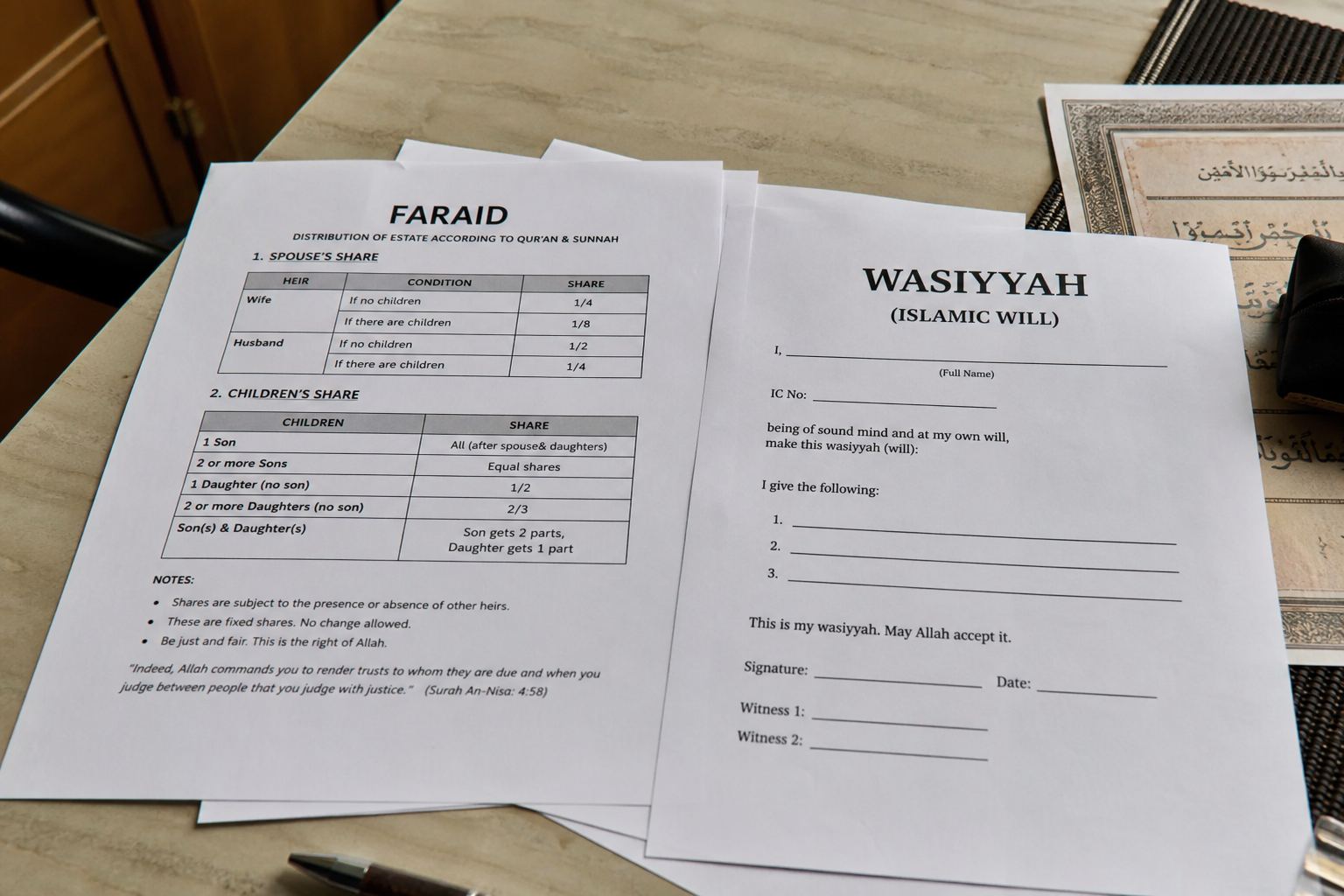
The usual order is funeral costs, then debts, including unpaid zakat where the school treats it as a debt, then any bequest up to one third, and then the fixed shares. Our pages on writing an Islamic will and inheritance basics set out the rest. If the person followed the Hanafi school and left no instruction about zakat, it is not binding on the heirs, but a FatwaCentre answer says that if they pay of their own accord it is hoped the duty will be lifted from the deceased. Fidyah cannot stand in for unpaid zakat.
How do I work out what was missed?
Use the records you have: bank statements, savings, gold, and any trade stock for each year. Count what the person held on their zakat date and apply 2.5 percent if it was above nisab. The zakat calculator can do the arithmetic once you type in the values, and the nisab threshold shows which standard to use. If records are thin, give a fair estimate and err towards paying more.
In England and Wales the executor settles the estate's legal debts under civil law, and we did not find a source on whether unpaid zakat counts as one. Discuss it with the executor and a scholar before the estate is distributed.
Quick answers
- Do heirs have to pay a dead person's unpaid zakat?
- In the Shafi'i, Hanbali and, per NZF, Maliki schools, yes, from the estate. In the Hanafi school, only if the person bequeathed it, though a Hanafi answer says it is hoped the duty is lifted if heirs pay of their own accord.
- Where does the money come from?
- From the estate, before the heirs' shares, where the school treats it as a debt. If it was bequeathed, it comes from the one third.
- How do I calculate missed years?
- Count what the person held on their zakat date for each year and apply 2.5 percent if it was above nisab.